
For most small repairs, the honest answer is the smallest tube on the shelf. Ordinary super glue — cyanoacrylate, to give it its proper name — handles the great majority of household fixes: a snapped mug handle, a loose bathroom tile, the trim peeling off a shoe. It bonds in seconds on plastic, ceramic, metal, wood and rubber. Buy a bigger tube only if you reach for glue every week, and buy flexible glue instead if the thing you are mending needs to bend.
The confusion is that four quite different products all sit in the same row calling themselves glue, and they are not interchangeable. A glue stick will not hold a chair leg together. A rigid super glue will crack off a trainer sole inside a week. Here is how to tell them apart, and which jobs each of ours is actually suited to.
What super glue does well, and where it fails
Super glue sets when it meets the trace of moisture on a surface, which is why it grabs so fast. It works as a very thin film between two parts that fit closely together. Keep the layer thin — a fat bead cures slowly and ends up weaker, not stronger.
Once cured it is hard and brittle, and that decides where it belongs. It cannot fill gaps, so two rough or uneven surfaces that barely touch will not bond well. It also struggles with polythene and polypropylene, the slippery plastics used for washing-up bowls and a lot of storage boxes. On those, you will get a repair that looks fine and lets go the first time it is lifted.
Small tubes are a feature, not a swindle
An opened tube of super glue is on a countdown. Every squeeze lets a little more damp air in through the nozzle, the tip slowly clogs, and what is left thickens until it will not run. That is why the Super Glue 3g 3 Pack at £0.90 makes sense for most homes: three separate 3g tubes means three fresh starts, and an unopened spare keeps happily in the drawer for the next emergency.
If you glue things often — models, crafts, running repairs on kids' toys — the Super Glue 10g 2 Pack at £1.10 gives you more to work with and better control on longer seams. Just accept it will not stay fresh for months once opened. Wipe the nozzle before you cap it, and store it upright somewhere cool. The Glue Set 3 Pack at £1.10 is the drawer-stocking option if you are starting from nothing and want a couple of small tubes ready to go.
Glue sticks are for paper, not repairs
The Glue Sticks 15g 4 Pack at £1.16 are a different animal: a soft, twist-up adhesive for paper and card. School projects, card making, sticking photos down, sealing the odd envelope that has lost its strip — that is their world. They go on dry, do not wrinkle paper the way runny liquid glue does, and small children can use them without redecorating the table.
What they will not do is hold weight. If it needs to stay stuck while something pulls on it, a glue stick is the wrong shelf entirely.
Flexible glue for shoes, trainers and fabric
Anything that flexes will shake a rigid glue joint apart, one bend at a time. Trainer soles, wellington boots, a handbag strap, the toe of a football boot — these need a glue that stays slightly rubbery after it dries. The Flexible Glue 36G at £1.10 is waterproof as well as flexible, so it suits repairs that live outdoors or get wet. Spread it thinly on both sides, press the parts together and leave it overnight before wearing the shoes; flexible glues trade instant grab for a cure that actually lasts.
Getting a bond that holds, and knowing when to stop
Clean, dry surfaces beat expensive glue every time. Wipe off grease, dust and old flaky adhesive, and lightly roughen very shiny plastic with fine sandpaper if you have some. Press the parts together for thirty to sixty seconds, then leave the repair alone for a few hours even if it feels set — full strength takes longer than the initial grab suggests. And treat the stuff with respect: it bonds skin instantly, so keep it away from children and open a window.
One last distinction worth making. If the repair has to carry real weight or fill a gap — a broken chair rung, a cracked bracket — super glue is simply the wrong tool. That is epoxy glue territory: a two-part adhesive that fills gaps and cures far stronger. Picking the right glue is mostly about not asking a product to do a job it was never made for.
And the one in the yellow tube: contact adhesive
One glue in the range works completely differently from everything above. Contact Adhesive 50g (£1.16) is not a super glue at all: you spread a thin layer on BOTH surfaces, let it go tacky for a few minutes, then press them together — and it grabs on contact, with no second chance to slide things straight. That makes it the right choice for bigger, flatter jobs the little tubes cannot cover: laminate edging peeling off a worktop, a leather sole lifting, rubber trim, cork tiles. The catch is the one-shot positioning, so line the pieces up on a dry run first. And if you go through super glue by the tube, the Super Glue 3g 5 Pack (£1.06) is simply the same 3g tubes in a cheaper bundle — five fresh starts in the drawer instead of three.
Frequently asked questions
How long does super glue last once the tube is opened?
Usually a few weeks before it thickens or the nozzle clogs beyond saving. Wiping the tip and capping it straight away helps. Unopened tubes keep far longer, which is why small multi-packs suit occasional use.
Can I repair trainers with ordinary super glue?
It will hold for a day or two, then the rigid joint cracks as the sole flexes. For anything that bends as you walk, use a flexible glue instead and give it overnight to cure before wearing them.
Is super glue waterproof?
It shrugs off splashes and damp air, but long soaking weakens an ordinary cyanoacrylate joint. For repairs that live in the wet — boots, outdoor gear — choose the flexible waterproof glue.
How do I get super glue off my fingers?
Soak them in warm soapy water and gently roll the skin apart; never pull. Acetone nail varnish remover also dissolves it, though it dries skin out, so wash and moisturise afterwards.
Shop the products in this guide
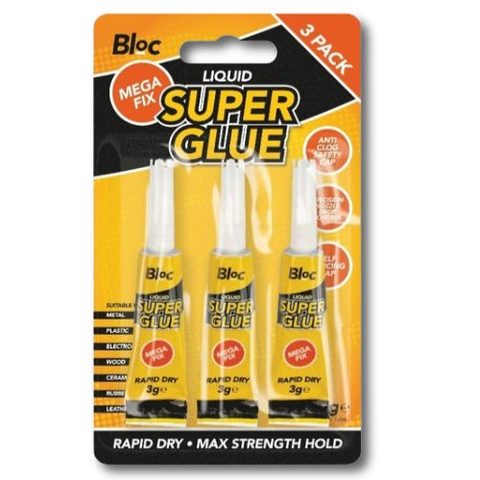 Super Glue 3g 3 Pack£0.90View product
 Super Glue 10g 2 Pack£1.10View product
 Glue Sticks 15g 4 Pack£1.16View product
 Glue Set 3 Pack£1.10View product
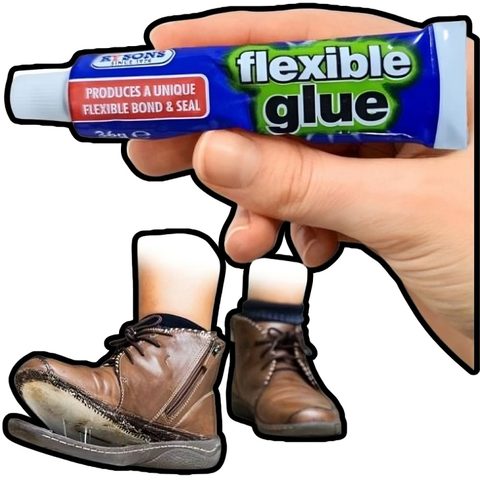 Flexible Glue 36G Strong Waterproof Adhesive£1.10View product
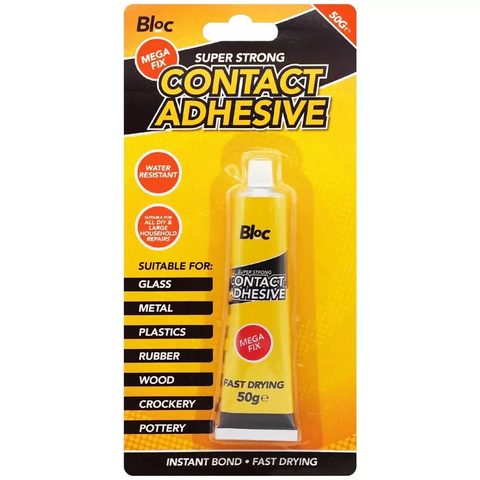 Contact Adhesive 50g£1.16Out of stockView product
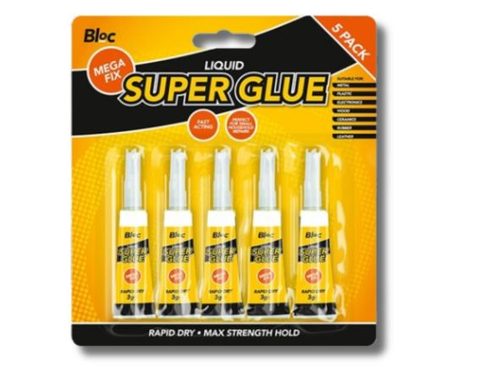 Super Glue 3g 5 Pack£1.06Out of stockView product