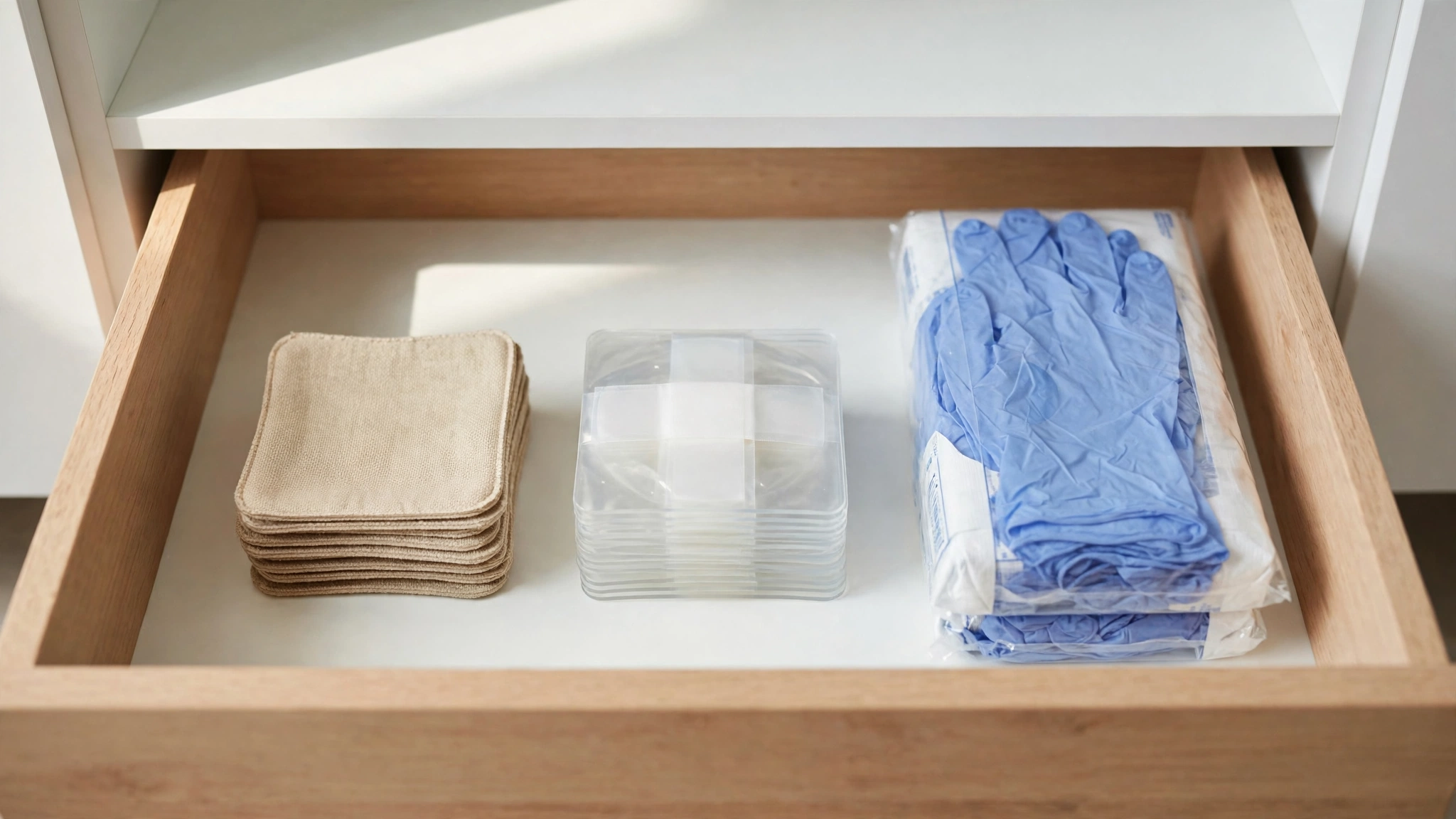
A first-aid drawer needs two kinds of plaster, not one: waterproof plasters for cuts that will get wet, and fabric plasters for skin that has to bend. With a box of disposable gloves alongside, the whole setup costs just over £3 and covers most of what a household actually deals with.
Every home knows the real first-aid problem, and it is not bandages - it is opening the drawer mid-bleed and finding one plaster, the wrong shape, stuck to itself. Buying plasters by the hundred is how that stops happening.
Waterproof plasters for anything that gets wet
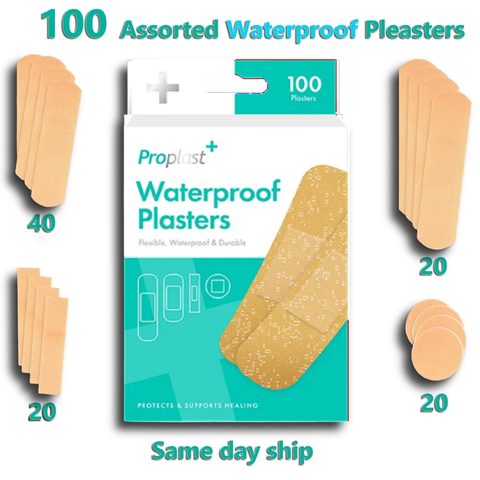
Hands go in water constantly: washing up, showering, gardening in damp soil, changing a nappy. Our Waterproof Plasters (£1.10 for 100) seal around the pad on all four sides, which is what keeps water - and the dirt in it - off the cut. Press the edges down on dry skin for a few seconds when you apply one; a waterproof plaster stuck onto wet skin is neither waterproof nor stuck.
One step comes before any plaster, and it is the one people skip: wash the cut. Run it under clean running water for a minute to flush out grit and soil - a plaster seals in whatever was on the skin when you stuck it down, and a garden cut sealed over dirt is a small infection waiting its turn. Pat the skin around it dry, then plaster.
They still need changing. Once the pad is soggy or the seal lifts at a corner, the protection has gone and a fresh plaster costs pennies. On fingers, wrap the plaster fully around so the edges meet on the back of the finger, away from what you grip.
Fabric plasters where skin has to bend
Knuckles, elbows, knees and heels defeat stiff plasters: the joint flexes, the edge peels, and the plaster is hanging off by lunch. Our Fabric Plasters (£1.10 for 100) are woven, so they move with the skin instead of fighting it, and they are the better default for anywhere that bends. They breathe more than waterproof ones too, which skin under a dry indoor cut generally prefers.
Heels are a special case. An ordinary fabric plaster inside a shoe gets rubbed off by the heel counter within the hour, which is why blister plasters exist as a separate, cushioned thing - we have written up how blister plasters work if raw heels are your recurring problem.
Gloves are for more than first aid
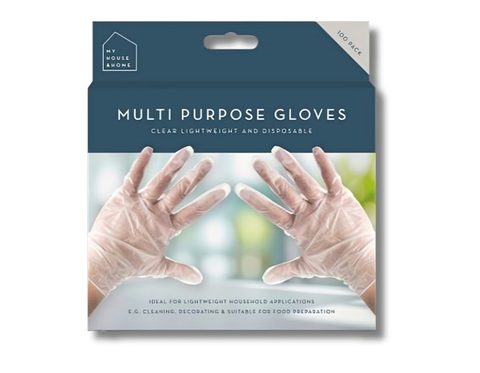
The Multi-Purpose Disposable Gloves (£1.06 for 100) start life in this drawer for a sensible reason: if you are cleaning a cut on someone else, gloves keep things hygienic for both of you. In practice they earn their box all over the house - hair dye, handling raw chicken, marinading anything with turmeric, cleaning the bathroom, and emptying things you would rather not touch.
Be honest about what they are: thin polyethylene gloves for hygiene and mess, not armour. They tear on sharp edges, lose their dignity entirely around strong solvents, and are wrong for oven heat. Change them between raw meat and anything else, the same as you would wash your hands between the two.
Keeping the drawer honest
A first-aid drawer works on a simple restock rule: when a box gets to about a quarter full, it goes on the shopping list - not when it is empty. Once a year, check the dates on anything medicinal and bin what has expired. The plasters and gloves above carry no real expiry worries, which is another reason they make a good permanent base to build the drawer around.
Where the drawer lives matters a little, too. Plaster adhesive hates steam, so a box kept above a kettle or in a steamy bathroom slowly loses its stick; a lidded box in a kitchen or hall drawer keeps everything dry, findable and away from small children. If your household has someone who cuts themselves at work on paper and cardboard all day, a few plasters in a coat pocket or bag saves the drawer being raided daily.
Frequently asked questions
Which plaster should I put on a cut finger?
Waterproof, most of the time: fingers get washed, dipped and wiped all day. If the cut sits right on a knuckle joint, a fabric plaster flexes better - and if you will be washing up, put a disposable glove over the top either way.
How often should a plaster be changed?
At least once a day, and sooner if it gets wet, dirty or starts to lift. A plaster left on for days traps moisture against the skin and slows the healing it was meant to help.
Are disposable gloves safe to use with food?
Yes, this type of polyethylene glove is commonly used for food handling. Treat them like a second skin rather than clean hands: put on a fresh pair for raw meat, and change them before touching anything ready to eat.
What else belongs in a basic first-aid drawer?
Antiseptic wipes, one proper bandage, tweezers for splinters and a small pair of scissors cover most households. Keep any medicines separate, dated, and somewhere children cannot reach - the plaster drawer and the medicine shelf are different places.