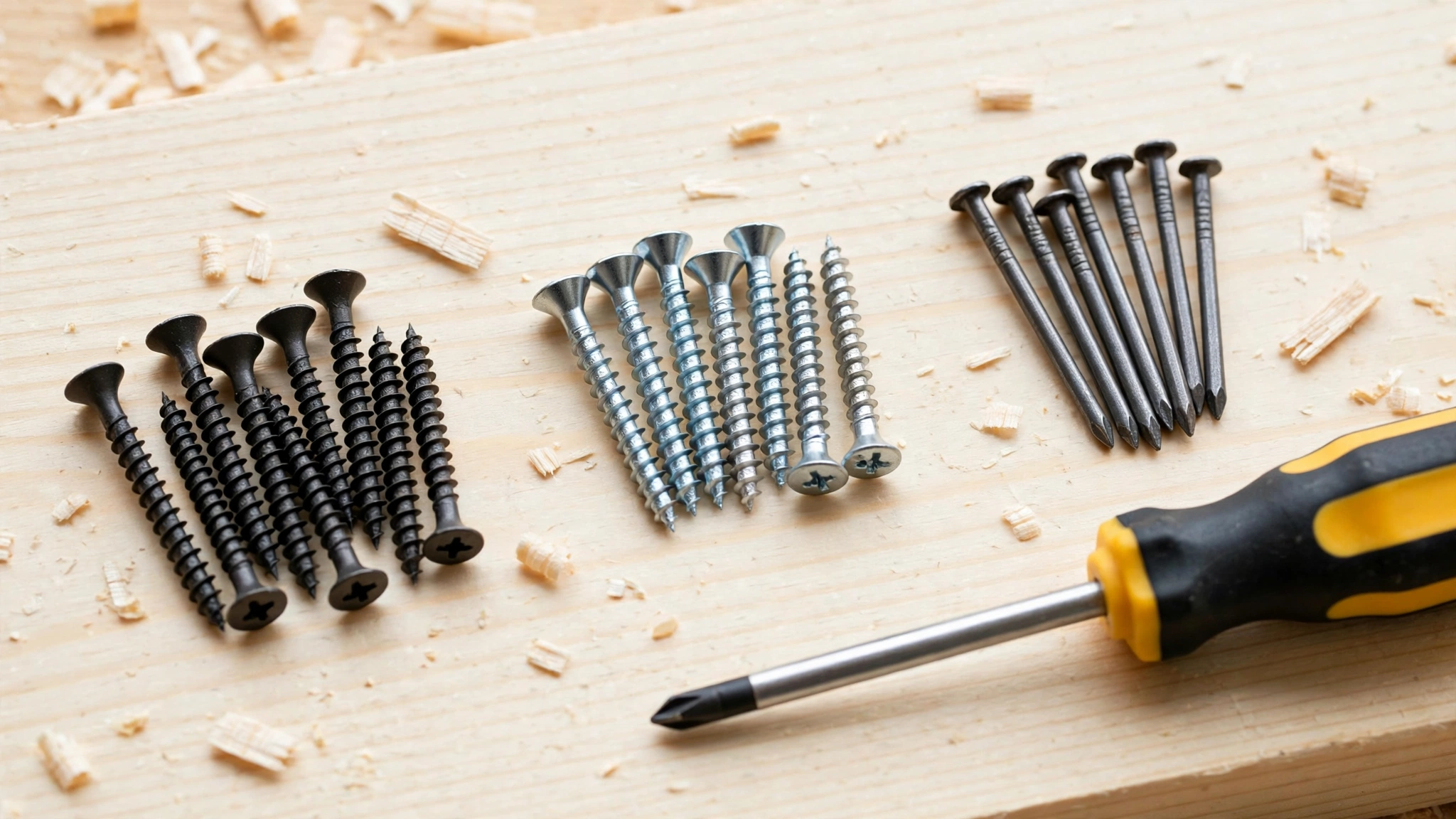
Match the fixing to the material and you will rarely go wrong. Drywall screws are for plasterboard, chipboard screws are for chipboard, MDF and flat-pack furniture, masonry nails are for brick and concrete, round wire nails are for ordinary timber, tacks are for fabric and light work, and cable clips come in sizes matched to the cable. Nearly every failed fixing you have ever cursed at was a decent screw or nail asked to grip the wrong material.
The packs below mostly cost 90p each and look deceptively alike on the shelf, so this is a plain guide to what each one is for, where each one fails, and the mistakes that make good fixings look useless. And if the job is hanging pictures and you'd rather make no holes at all, hanging pictures without drilling covers the stick-on alternatives.
Plasterboard: drywall screws
Drywall Screws at £0.90 have a coarse, deep thread designed to bite into plasterboard and the timber studs behind it, and a bugle-shaped head that sinks flush without tearing the paper surface. They are the right choice for putting up plasterboard and for light fixings into stud walls.
The classic mistake is using them in brick because they were already in the toolbox. The thread has nothing to grip in masonry, so they either spin uselessly or snap. The other drywall trap is expecting plasterboard alone to hold weight: a heavy mirror needs the fixing in a stud, or a proper plasterboard anchor, not a longer screw.
Chipboard and MDF: chipboard screws
Chipboard Screws at £0.90 for a 125g pack have a sharp point and thin shank made to cut into man-made boards without splitting them — the whole world of flat-pack furniture, kitchen units and MDF shelving. The countersunk head pulls tight and sits flat, which matters when panels butt up against each other.
One place they still split the board: close to an edge. Within a couple of centimetres of the end of a piece of chipboard or MDF, drill a slim pilot hole first. It takes ten seconds and is the difference between a tight joint and a cracked corner you have to hide forever.
Brick and concrete: masonry nails
Masonry Nails at £0.90 are made from hardened steel, because an ordinary nail driven at brick simply folds over. They are for light fixings straight into brick, block and mortar joints — cable runs, battens, clips and brackets that do not carry serious weight.
Technique matters more than strength here. Start with firm taps to seat the point, keep the nail dead straight, and wear eye protection, because hardened steel can chip. If a nail keeps bending, you are probably hitting a stone or a particularly hard patch; shifting an inch, or aiming for the mortar joint, usually solves it. For heavy loads — a boiler, a big TV bracket — nails are the wrong answer entirely and the job needs a drilled hole, a wall plug and a screw.
Timber and general work: round wire nails
The Round Wire Nails at £0.90 are the general-purpose default: fencing repairs, shed work, timber battens, rough carpentry and garden jobs. They are cheap, they hold well in softwood, and the galvanised finish slows the rust when they live outdoors. For anything finer — skirting, trim, work you will look at every day — drive them slightly below the surface with a punch and fill the hole, so the fixing disappears.
The small stuff: tacks and cable clips
Tack Nails at £0.90 are short, fine pins for upholstery, fabric, carpet edges and light trim — jobs where a full-size nail would split the material or show. Push them most of the way with your fingers, then tap them home, and watch where your thumb is.
Cable clips are sized by the cable they grip. The Round Cable Clips at £0.90 come in 4mm up to 12mm, and the fit should be snug: a clip that rattles looks untidy, and one that is forced over a fat cable can pinch and damage it. Measure the cable if you are unsure, or take the guessing out of it with the 100pc Assorted Cable Clips at £1.10, which covers the 6mm, 8mm and 10mm sizes most household cables — TV, broadband and extension leads — actually are. Space clips every 30 to 40cm along a skirting run and the cable stays put instead of sagging between fixings.
Frequently asked questions
Can I use drywall screws in wood or brick?
In wood they will hold, though chipboard screws grip better and are less brittle. In brick, no — the thread cannot bite into masonry and the screw will spin or snap. Brick needs masonry nails for light jobs or a plug and screw for heavy ones.
Why do my masonry nails keep bending?
Usually a glancing hammer blow, a nail that isn't straight, or a very hard patch of brick or stone. Seat the point with light taps first, keep everything square, and try the mortar joint if the brick itself keeps winning.
What size cable clip do I need?
Match the clip to the cable's diameter so it grips without crushing. Most household cables fall between 6mm and 10mm. If you don't know, an assorted box saves the measuring and leaves spares for the next job.
Do chipboard screws always need a pilot hole?
Not in the middle of a panel — the sharp point is designed to go straight in. Near an edge or the end of a board, yes: a slim pilot hole is cheap insurance against the board splitting along its weakest line.
Shop the products in this guide
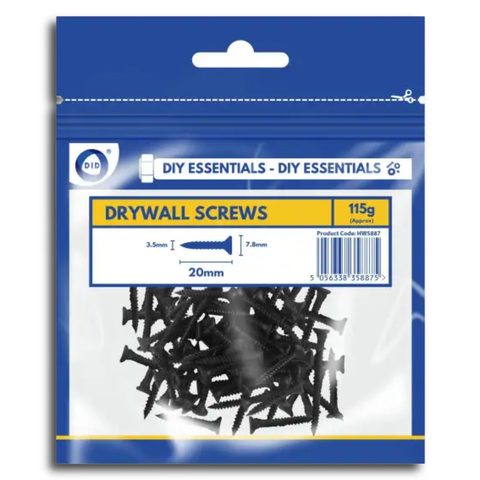 Drywall Screws Rust Resistant Carbon Steel Plasterboard Screws£0.90View product
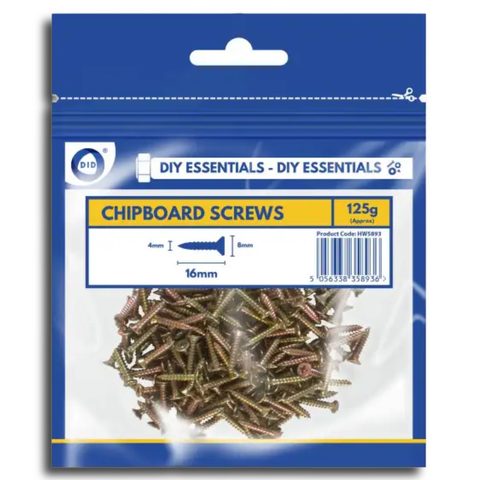 Chipboard Screws 125g Pack – Countersunk Wood Screws for Chipboard, MDF & Softwood£0.90View product
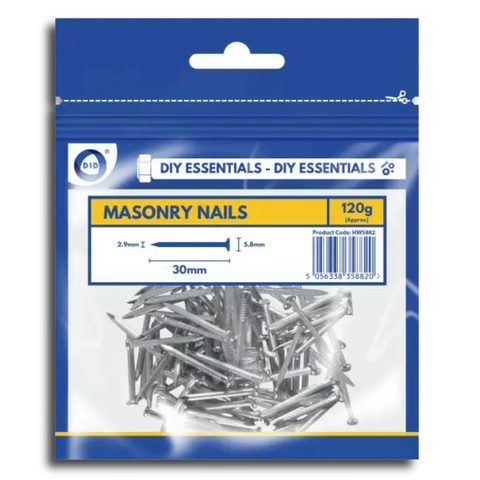 Masonry Nails Galvanised Concrete Brick Fixing Nails£0.90View product
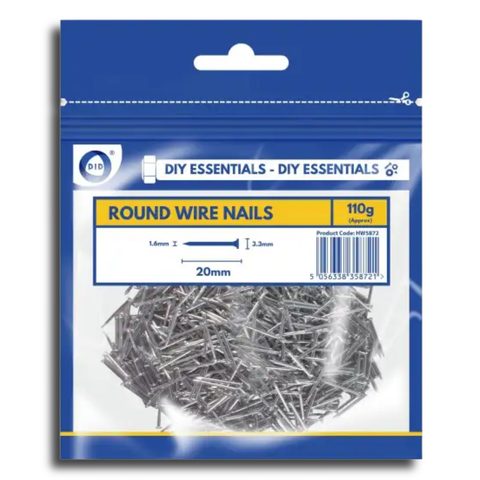 Round Wire Nails Galvanised Steel Multi-Purpose DIY Construction Nails£0.90View product
 Tack Nails 120g Pack Black Upholstery Nails DIY Fixing Pins£0.90View product
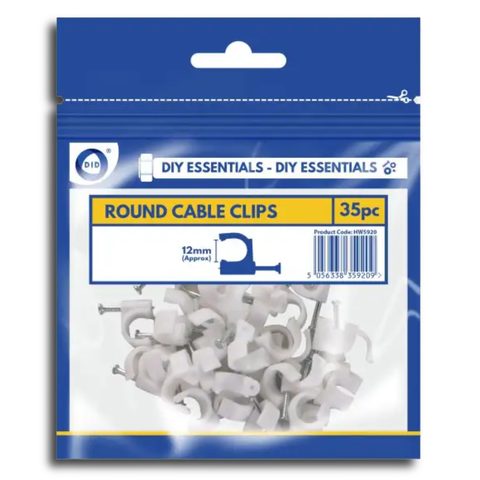 Round Cable Clips with Steel Nails – 4mm, 6mm, 8mm, 10mm & 12mm Sizes£0.90View product
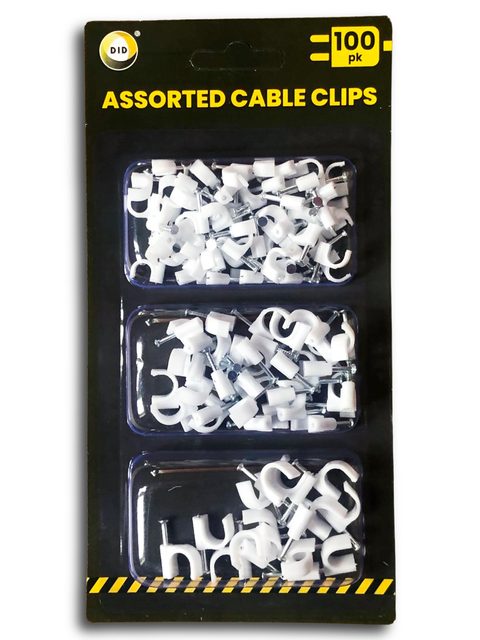 100pc Assorted Cable Clips White Cable Tidy Clips 6mm 8mm 10mm with Nails£1.10View product