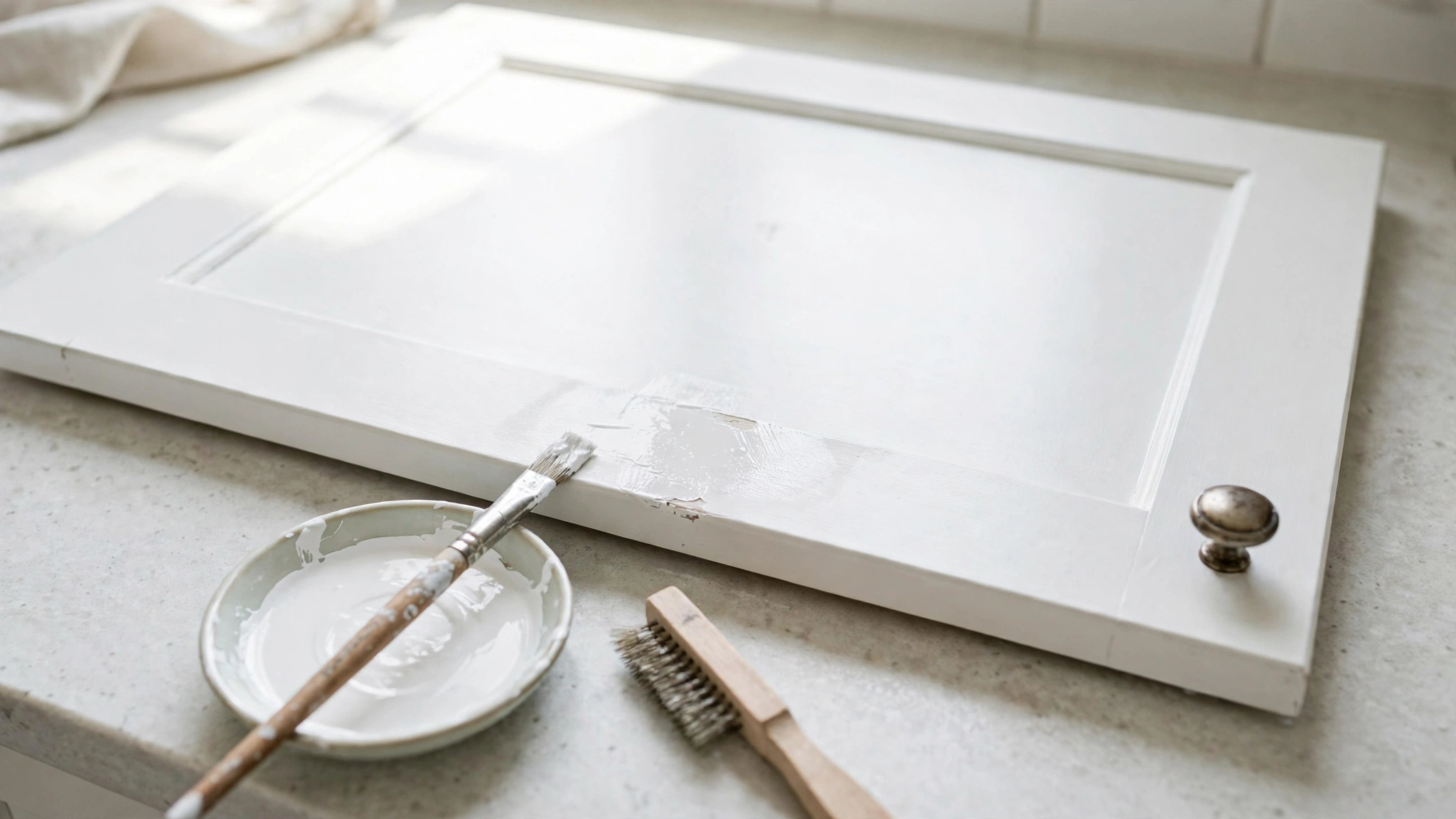
Touch-up painting is a different job from decorating a room. You do not need rollers and dust sheets to fix the scuff behind the radiator - you need one small brush you can rinse in a jam jar, the right leftover paint, and five unhurried minutes.
The other half of touch-ups is prep, and it is mostly a wire brush. Rust, flaking paint and barbecue grime are what caused the marks in the first place, and paint put straight over them fails within the season.
Small brushes for small jobs
Keep two sizes to hand and you can do nearly every repair. Our PaintBrush Set pairs a 1-inch and a 4-inch brush (£0.96): the small one for scuffs, skirting and radiator edges, the wide one for fence panels and shed doors. The 3pc Paint Brushes Set (£0.96) gives you 1, 1.5 and 2 inches - the classic touch-up sizes, for water- and oil-based paint - and the 2pc Paint Brush Set (£1.04) in 2 and 3 inches sits between the two, handy for cabinet doors and window frames.
Technique matters more than the brush. Load it lightly, and feather the edges of the patch outwards so there is no hard line where new paint meets old. Two thin coats beat one thick one, which will run on anything vertical. And for a whole room rather than a repair, this little kit is not the tool - our beginner's decorating kit guide covers the brushes, rollers and dust sheets a full room actually needs.
Match the sheen, not just the colour
The commonest touch-up failure is a patch that is the right colour and still shouts, because the finish is wrong: a dab of matt over silk or eggshell shows as a dull island every time the light crosses it. Use the same paint from the same tin if you possibly can - stir it thoroughly, because the pigments settle - and test a dab somewhere hidden first.
Even then, expect limits. Paint fades on the wall over a year or two, especially in sun, so an exact match is sometimes impossible whatever you do. If a patch in the middle of a big wall refuses to blend, painting that one wall edge-to-edge with what is left in the tin is quicker than a fourth attempt at invisibility.
Wire brushes: the prep nobody sees
Our Wire Brush Set (£1.40 for 3) gives you different sizes for flat surfaces and awkward corners, and the work is unglamorous: rust off gate hinges and railings, flaking paint off metal, scale off the barbecue grill, and grime off tools before they go away for winter. Anything you paint over rust will bubble and lift, because the rust carries on eating underneath - the wire brush is what makes the paint job last.
Respect the bristles. They are stiff steel: wear gloves, keep the brush away from chrome, soft metals and anything polished, because it will score them, and think about eye protection, because bristles do occasionally snap off. For a barbecue, heat the grill first, brush it down while it is warm, and wipe it with an oiled cloth once it cools.
Washing up decides whether a cheap brush lasts
Budget brushes get their reputation from being thrown away clogged, not from being badly made. Water-based paint rinses out in warm water in two minutes; work the bristles under the tap until it runs clear, then dry the brush flat so water does not rot the handle or rust the ferrule. Oil-based paint needs white spirit first, then the same wash.
It also pays to keep one small brush purely for gloss and varnish work, because a brush that has lived in emulsion will shed water-based grit into a gloss finish forever. Store brushes upright in a jar or hanging from a hook, never standing on their bristles in a tin of murky water. A brush washed the same day it is used will do touch-ups for years; one left overnight in paint is a bin item by morning, whatever it cost.
Frequently asked questions
Why does my touch-up patch show even though it is the same paint?
Usually sheen or fading. The finish on the wall has dulled, or the paint has lightened in the sun, so fresh paint looks glossier and darker. Feathering the edges helps; if the patch still shows, painting the whole wall section is the honest fix.
What size brush is best for painting a radiator?
A 1 or 1.5-inch brush reaches between and behind the panels without loading paint everywhere else. Paint a cold radiator, work from the top down, and expect two thin coats rather than one thick one.
Can I use a wire brush on a barbecue grill?
Yes - that is one of its best jobs. Warm the grill first so the grease softens, brush firmly, and once it has cooled, wipe the bars with a little cooking oil on kitchen paper to protect them.
How do I stop brush marks when painting cabinets?
Thin coats, a lightly loaded brush, and patience between coats. A very light sand with fine paper once the first coat is fully dry knocks back any ridges, and the second coat then goes on noticeably smoother.
Shop the products in this guide
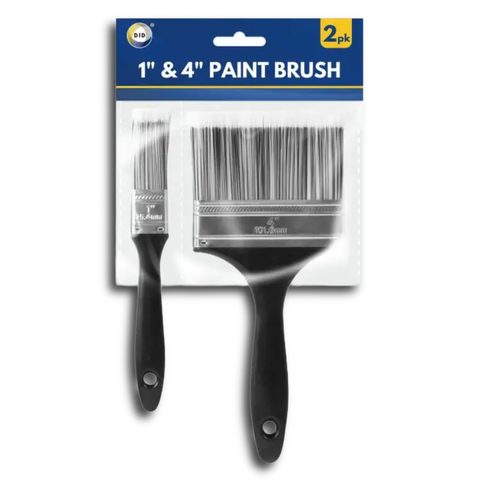 PaintBrush Set 2pc 1 Inch & 4 Inch Paint Brushes Black Handle DIY Decorating£0.96View product
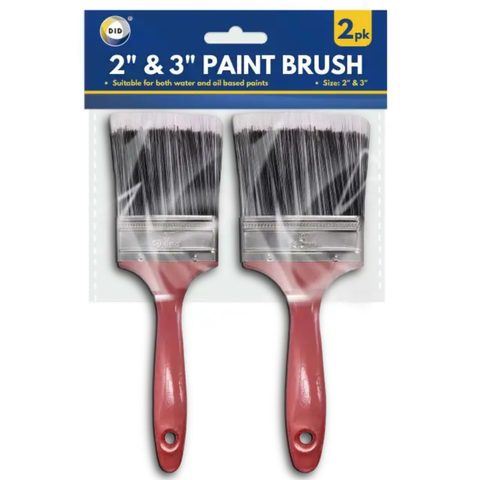 2pc Paint Brush Set 2 Inch & 3 Inch Decorating Brushes for Water & Oil Paint£1.04View product
 3pc Paint Brushes Set 1″ 1.5″ & 2″ Decorating Brushes for Water & Oil Paint£0.96View product
 Wire Brush Set 3 Piece£1.40View product