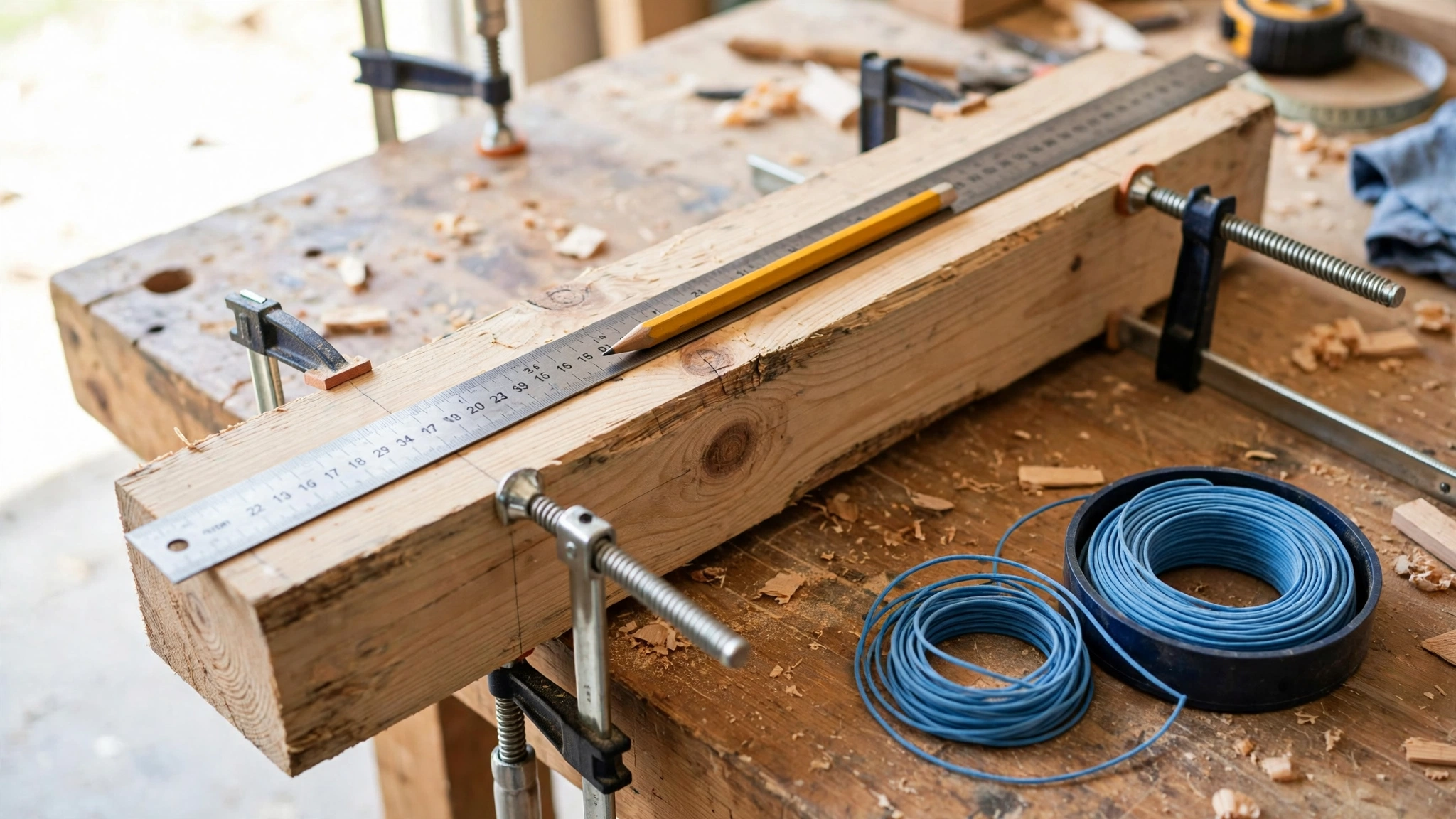
Jobs go crooked at the measuring and marking stage, long before anything is cut or fixed — and the tools that prevent it are the least glamorous in the box. A steel ruler, a flat pencil, a handful of spring clamps and a length of line between them keep work straight for a total outlay of a few pounds.
None of these is a precision instrument for engineering, and we will not dress them up as such. They are workshop basics that do their one job properly, at £1.10 to £2.60 each, and they get used on jobs their owners never predicted.
A steel ruler is a straightedge, not just a measure
The Marksman 2 Piece Stainless Steel Ruler Set (£1.60) gives you a 6 inch and a 12 inch rule, and the measuring is honestly the lesser half of their work. A steel edge is a cutting guide: run a craft knife along it and the blade follows the metal, where a plastic ruler gets nicked, wanders, and eventually gives you a wavy line and a shortened ruler.
The markings are etched rather than printed, so they survive being dragged across timber and wiped clean of glue. The 6 inch lives on the bench for marking screw positions; the 12 inch covers boards, paper and fabric. Store them flat if you can — a bent straightedge is worse than none.
Flat pencils that stay where you put them
Carpenter's pencils are flat for a reason that becomes obvious on a ladder: they do not roll. The Marksman Carpenters Builders Pencils 12 Pack (£1.10) — twelve, so one in every coat, box and van door pocket — have a thick rectangular lead that marks rough timber, brick and concrete without snapping the way a school pencil point does on grain.
The flat shape gives you two edges, too: a thin line drawn with the edge upright, a fat one laid flat for rough marking-out. They sharpen with a knife rather than a sharpener, which suits a flat lead, and the lead is soft enough to show on dark timber yet hard enough not to smear across a whole cut line. At about 9p each, losing one into a wall cavity is a shrug.
Spring clamps: extra hands for a pound
The Marksman 8 Piece Metal Spring Clamps (£1.10) are 2 inch clamps — think strong clothes pegs in zinc-plated steel. Gluing is where they earn their keep: a repair to a chair rung, a picture frame corner, a cracked plant pot, held firmly in line while the glue grabs, by clamps that cost pennies and ask nothing of your grip strength beyond the squeeze to open them.
Eight in the pack is the useful number. Two hold a joint, two more hold the sheet you are cutting, and the rest end up clipping tarpaulins, keeping bags closed and pinning a work light where you need it. Their limit is size and pressure: a 2 inch spring clamp takes small work only, and it will not pull a warped board flat. For joints much beyond a couple of inches thick, you want a proper G-clamp — these are the quick, light jobs crew.
The chuck key and the tube cutter
A drill with a keyed chuck and no chuck key is a paperweight, and the key is always the thing that got lost in a house move. The Marksman Chuck Key 4 Way Universal (£1.20) carries four sizes on one cross, covering the chucks on most household drills old and new. Tie it to the drill's cable with a short loop of string and it stops being a thing that gets lost.
The Marksman Mini Tube Cutter 3-22mm (£2.60) answers a different frustration: cutting copper or brass pipe square. A hacksaw wanders and leaves burrs that ruin a compression fitting; a tube cutter clamps on, scores deeper with each turn, and snaps the pipe cleanly at the line. It handles the sizes behind sinks and radiators and earns fans among homebrewers for the same clean cut on small pipework. Deburr the inside edge with a twist of the cutter's reamer or a file, and the fitting seats first time.
Grommets and a line: tarps and brickwork
Tarpaulins fail at the eyelets — the sheet is fine, the corner has torn out. Marksman Tools 10mm Grommets (50 pack, £1.40) are the brass-plated replacement rings: two halves that clamp through a punched hole and restore the tying point. One honest note: grommets need a punch and setting tool, or a careful hammer-and-block job, to fit properly; the 50 rings are the consumable, not the whole kit. With them fitted, a £10 tarp goes back to work instead of into the bin.
And for straight lines in the garden: the Marksman Masonry Line Pin Set (£2.20) runs 12 metres of line between two pins. Brick courses, block paving edges, a fence run, even a long straight border — the line does not sag or wander the way eyeballing does, and it lifts away when the work is done. String from the kitchen drawer is the usual substitute and the usual disappointment; it stretches, sags and snaps. A proper line is one of those tools that feels like a luxury until the first straight row of blocks goes down.
Frequently asked questions
Why are carpenter's pencils flat?
So they stay put. A round pencil rolls off beams, ladders and sloped roofs; a flat one lies where it is set down. The shape also carries a thick lead that marks rough timber without snapping, and gives a thin or thick line depending on the edge used.
What size pipe does the mini tube cutter fit?
Anything from 3mm up to 22mm in copper or brass — the range that covers household plumbing behind sinks and radiators and most small homebrew pipework. It is not made for steel or thick-walled plastic waste pipe.
Can spring clamps hold wood while glue dries?
Yes, for small joints — frames, rungs, trims and repairs within the clamp's 2 inch jaw. They hold pieces in line while glue grabs, which is most of the job. Bigger or warped pieces need the stronger, slower squeeze of a G-clamp or bar clamp.
Will a 4-way chuck key fit my drill?
Very likely. The four ends cover the standard chuck sizes fitted to most household and older trade drills, keyed chucks being built to a handful of common sizes. If your drill is keyless — tightened by hand — you do not need one at all.
Shop the products in this guide
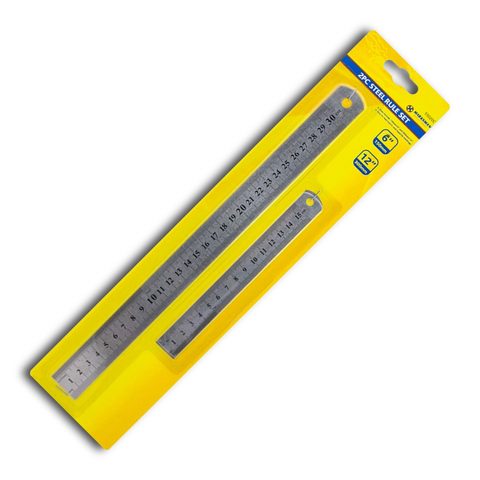 Marksman 2 Piece Stainless Steel Ruler Set 6 Inch & 12 Inch Measuring Rules£1.60View product
 Marksman Carpenters Builders Pencils 12 Pack£1.10View product
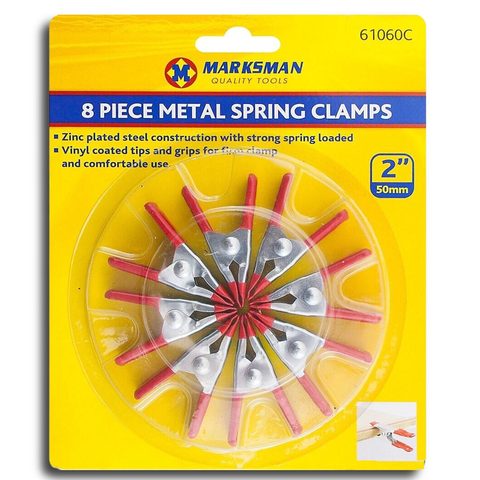 Marksman 8 Piece Metal Spring Clamps 2 Inch Zinc Plated Clamp Set£1.10View product
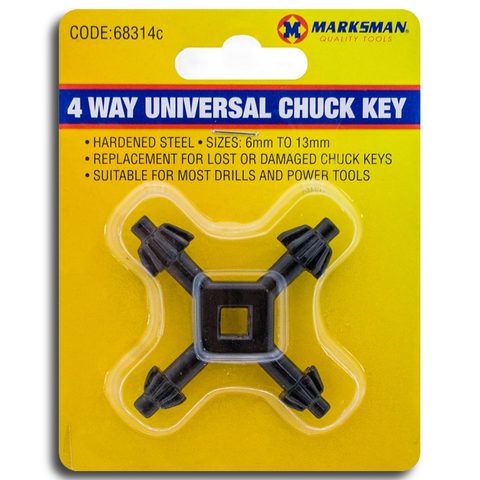 Marksman Chuck Key 4 Way Universal Drill Chuck Key for Power Tools£1.20View product
 Marksman Mini Tube Cutter 3-22mm – Copper Brass Pipe Cutting Tool£2.60View product
 Marksman Tools 10mm Brass-Plated Grommets 50 Pack for Tarpaulin Repair£1.40View product
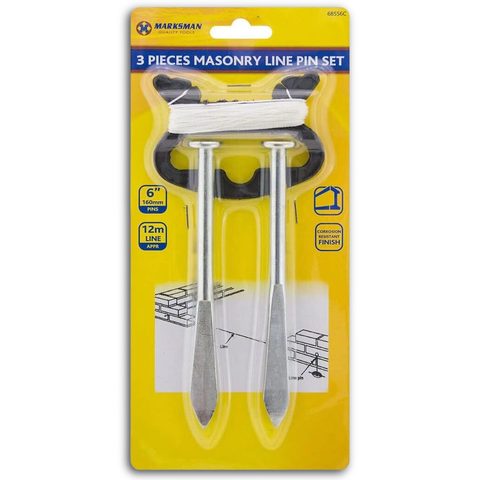 Marksman Masonry Line Pin Set 12m – Bricklaying & Building Line Set£2.20Out of stockView product