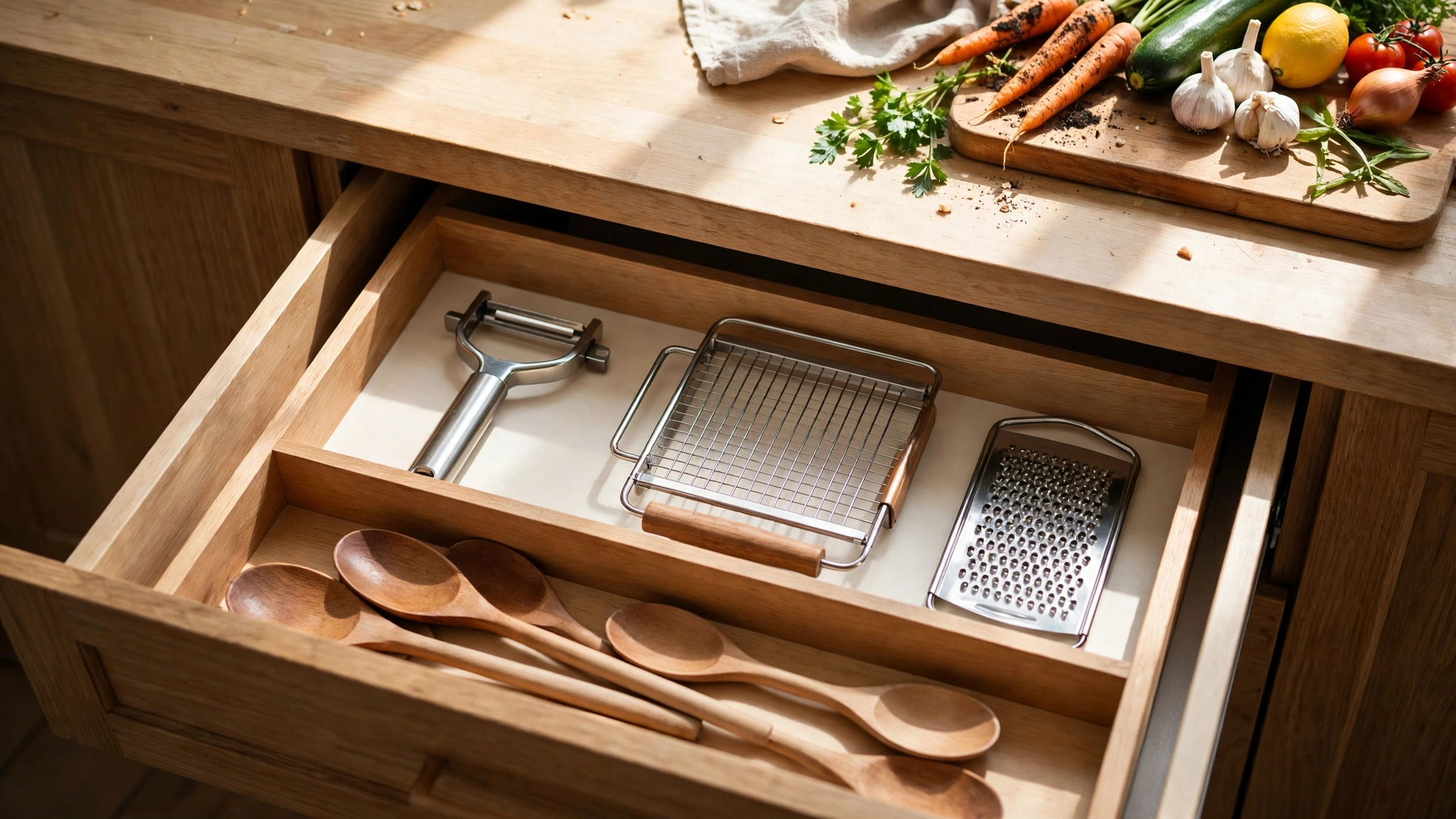
The tools that earn their space are the unglamorous ones you grab without thinking: a sharp peeler, a flat grater that stores in a gap, a wire slicer that cuts eggs and cheese evenly, and wooden spoons that stir without scratching the pan. If a gadget needs its own box, a special cleaning ritual and a prayer before use, it is probably taking rent from better tools.
Small kitchens punish clutter. One shallow drawer often has to hold everything from the tin opener to the potato masher, so every item has to justify itself in weekly use, not in a photograph. Budget tools can do that job well. They will not feel like heirloom kit, the handles are usually plain, and a blade will dull sooner than a premium one. But at a pound or so, a tool that works hard for a year and is cheap to replace is a fair trade.
Peelers: one sharp, one spare
A swivel peeler follows bumps, which makes it the easier choice for carrots, parsnips, courgettes and anything long or knobbly. The blade turns as you pull, so you spend less time fighting the shape of the vegetable. A fixed, straight peeler gives a firmer bite on potatoes and apples, where you want control rather than float. Neither style is wrong; hands tend to pick a favourite within a week.
Keeping two peelers sounds like clutter until the first is sitting in a sink of grey water and the potatoes are already on. The 2 pack stainless steel peeler at £1.30 solves that in the simplest way: one in the drawer, one in the wash, no archaeological dig through the cutlery tray. The Prima 3 piece swivel set at £1.12 suits households that cook in pairs or keep losing one to the vegetable peelings. Rinse peelers straight after use, especially after potatoes, because dried starch turns a ten-second rinse into a scrub.
Even slices without the knife wobble
Cheese is where a cheap knife shows its limits. It drags, wedges and cuts a slice that is thick at one end and tissue-thin at the other. A wire cheese slicer at £1.18 pulls through a block in one steady line, which is what you want for toasties, crackers and sandwiches that are meant to sit flat. It is at its best on cheddar, edam and other firm-but-not-rock-hard cheeses. Very dry, aged blocks can fight the wire, and forcing it only bends things; use a knife for the first cut there and the slicer for the portions after.
The egg slicer at 86p has the same appeal. A boiled egg cut with a knife sheds yolk crumbs everywhere and rarely lands in even rounds. Press a cooled, peeled egg through the wires and you get tidy slices for salads, sandwiches and noodle bowls. Let the egg go properly cold first, and press slowly rather than slamming the lid; hot eggs smear, and rushed wires are the ones that kink. It is a one-job tool, but the job comes up often enough in packed lunches.
The flat grater and the spoons
Box graters are useful and annoying in equal measure: useful because they stand up, annoying because they hog a cupboard corner and are grim to wash. A flat stainless steel grater, 24.5cm long and £1.00, slides into the slot beside the chopping boards and rinses clean in seconds. It handles cheese, carrot, garlic and lemon zest for everyday cooking. Grate firm cheese straight from the fridge, keep your fingertips tucked well back, and stop before the last nub rather than seasoning dinner with knuckle. A folded tea towel under the tip stops it skating across the worktop.
Wooden spoons earn their place by being kind. They will not scratch non-stick coatings, they do not clatter, and the handle stays comfortable over a hot pan. The Prima set of five assorted sizes at £1.80 means a short spoon for scrambled eggs, a long one for the stockpot, and spares when two pans are on at once. Wash them promptly and let them dry standing up; left soaking, budget wood swells and eventually splits. That is the honest limit of cheap wood, and at this price most people accept it.
Small extras, kept honest
Then there are the seasonal oddballs. Corn on the cob holders, little twin-pronged handles at £1.32 for eight pieces, look like drawer filler for eleven months of the year. In corn season they are the difference between enjoying it and juggling a hot, buttered cob with fingertips and regret. They keep fingers away from the heat and stop the butter sliding straight onto your wrists. Keep the set together with an elastic band in the cutlery tray so you are not hunting a missing fourth holder in August.
The test for any of these is simple: will it be used this week, can it be washed in under a minute, and does it store flat or in the tray you already own? The tools above pass. A spiraliser bought in a fit of January enthusiasm usually does not, and there is no shame in admitting that the humble peeler won.
Frequently asked questions
How often should I replace a cheap peeler?
When it starts tearing instead of cutting, or you find yourself pressing harder to get through a carrot. For most homes that is somewhere between six months and two years. At around a pound, replacing a dull peeler beats struggling with it.
Can these graters and slicers go in the dishwasher?
Stainless steel pieces usually cope fine, though blades stay sharper for longer with a quick hand wash and immediate dry. Wooden spoons should never live in the dishwasher; the heat and long soak split the wood.
Are wooden spoons hygienic?
Yes, if they are washed in hot soapy water and dried properly rather than left in the sink. Retire any spoon that has cracked deeply, smells sour after washing, or has gone black around the bowl.
What should I buy first for a tiny kitchen?
A sharp peeler, one wooden spoon and the flat grater cover most daily jobs for about £4 in total. Add the egg and cheese slicers later if sandwiches and salads are regulars in your house.
Shop the products in this guide
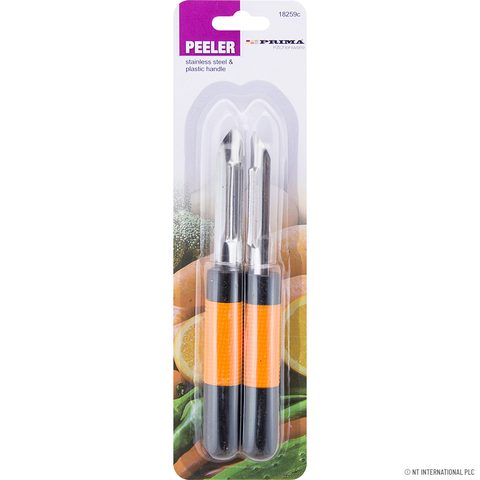 Stainless Steel Potato Peeler Vegetable & Fruit Peeler 2 Pack Ergonomic£1.30View product
 Prima 3 Piece Peeler Set Stainless Steel Swivel Vegetable & Fruit Peelers£1.12View product
 Cheese Slicer Stainless Steel – Easy Slice Cutter for Cheese Blocks£1.18View product
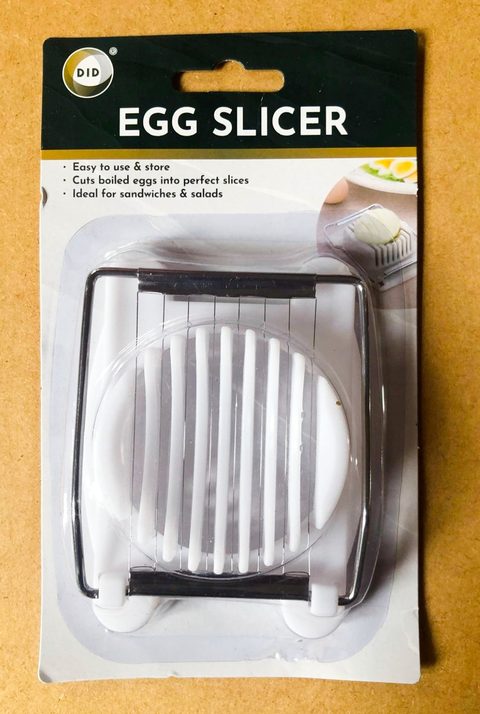 Egg Slicer Stainless Steel Wire Cutter for Boiled Eggs Sandwiches Salads£0.86View product
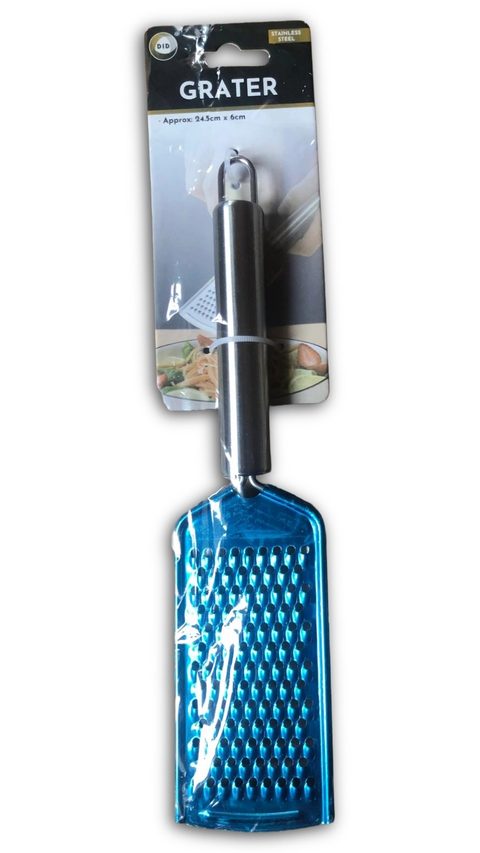 Stainless Steel Grater 24.5cm Kitchen Cheese Vegetable Fruit Food Grater£1.00View product
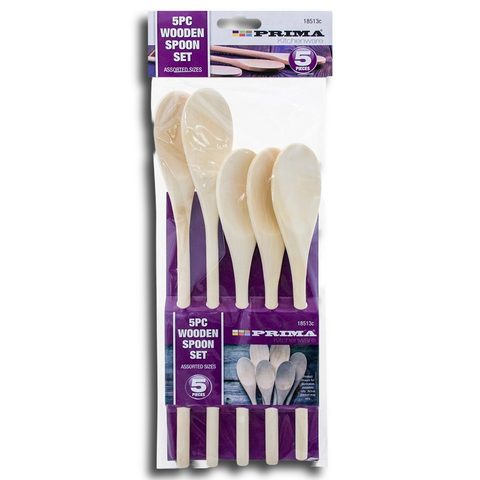 Prima Wooden Spoon Set Assorted Sizes 5pc£1.80View product