Parcels survive the post when four boring things happen: the box cannot flex, every seam is taped in an H, the label is protected from rain, and the address is written inside as well as out. Soft things like clothes can travel in a mail bag instead of a box, but anything rigid, heavy or fragile needs the box, the padding and the tape.
December is when weak packing gets found out. Parcels are stacked, slid, dropped into cages and left in damp vans, then a present arrives looking like it lost an argument. Online sellers get the same treatment all year round, plus a review system waiting at the other end. The good news is that postal damage is mostly preventable with tape, the right bag or box, and five unhurried minutes.
Tape is the strength, not the afterthought
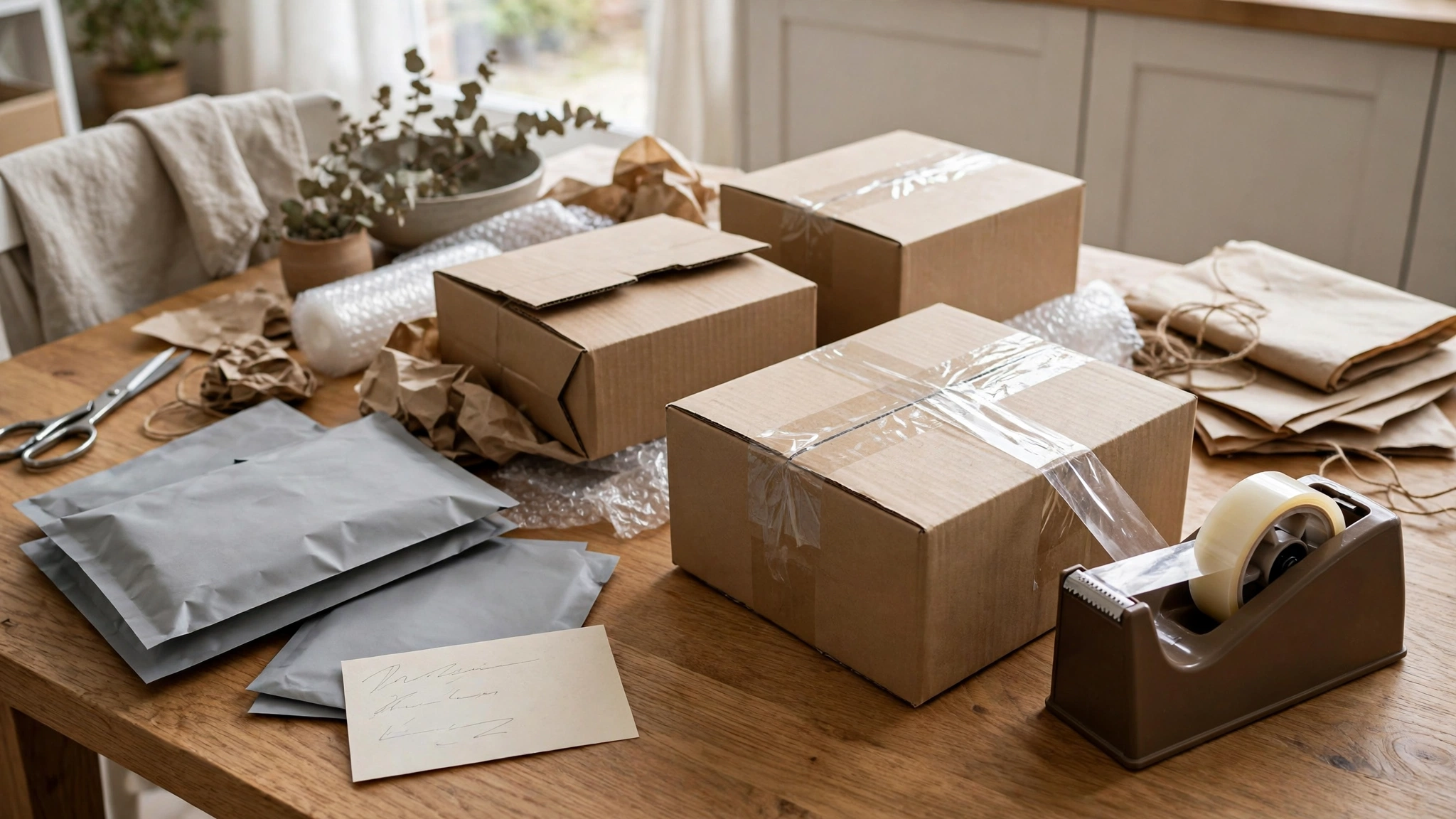
Use the H method and weak boxes become respectable. Run one strip of tape along the centre seam where the flaps meet, then one strip across each end seam, so the tape pattern on the top looks like a letter H. Do the same on the bottom if the box is heavy or being reused. Most parcel failures start at a corner or a centre seam that peels in a cold van, and the H closes both. Press tape down firmly with the heel of your hand; tape merely laid on dusty cardboard is decoration, not structure.
Wide tape matters here. The Marksman clear packing tape is 48mm wide and the 6 pack at £8.50 gives you 132 metres a roll, which suits anyone posting Christmas boxes or selling regularly. A tape dispenser gun at £3.06 sounds industrial until you have wrapped six parcels: it keeps the end findable, cuts cleanly and stops the tape folding onto itself and your sleeves. Keep clear tape off barcodes and QR codes on postage labels, because a creased layer of tape can stop a scanner reading them; tape the edges of the label instead, which still keeps the rain out.
Bags for soft, boxes for solid
Mail bags are brilliant at the job they are designed for. The grey self-seal bags, 100 for £1.94 and made from recycled material, swallow jumpers, bedding, soft toys and shoes in bags without letting weather in. Push the air out before sealing so the parcel does not become a balloon, and for anything valuable or damp-prone, double-bag with the seals at opposite ends. The grey finish also keeps the contents private, which matters for gifts and for sellers posting brands people recognise.
The limit is shape. Anything with hard corners, liquid inside, a screen, a handle that can poke through or a weight that concentrates in one spot belongs in a box with padding around it. A mug in a mail bag is a bag of pieces waiting to happen. Fill gaps in boxes with scrunched paper or clean packaging from deliveries so the contents cannot travel; if you can hear it moving when you shake the parcel gently, it needs more padding, not more hope.
The address inside, and the boring checks
Labels fall off, get soaked or get torn on machinery. A second address inside the parcel, written on paper with the recipient's name, address and your return address, gives the parcel a way home when the outside fails. Put it on top of the contents before sealing so it is the first thing found. On the outside, write the return address smaller on the back; undeliverable parcels without one tend to vanish into depots.
Weigh and measure before you join the Post Office queue, especially in December when the queue has opinions. Kitchen scales handle most parcels, and a tape measure settles the size band, because price often turns on dimensions as much as weight. Check the seams and corners one last time, and photograph the finished parcel next to its label if you are selling; it settles most 'it arrived damaged' conversations before they start.
Selling online without the drama
Anyone posting eBay or Vinted sales weekly learns the same lessons, just with star ratings attached. Keep a small packing station: tape gun loaded, a stack of mail bags, three sizes of saved boxes with old labels fully removed or covered, because a stray old barcode can send a parcel on a nostalgia tour of the network. Post on the day promised, keep the receipt until the buyer confirms arrival, and pack returns-proof: the standard you pack to is the journey back as well as out.
None of this needs specialist kit. It needs tape that is wide enough, a bag or box matched to the contents, an address in two places, and the discipline to shake the parcel and listen before it leaves the house. Parcels packed that way come back as compliments instead of claims.
Frequently asked questions
Can I post a mug in a mail bag?
Not safely. A mug needs a box, wrapped, with padding on every side so it cannot touch the box walls directly. Mail bags protect against weather and scuffs, not knocks, and ceramics lose every argument with a conveyor belt.
How much tape does a box actually need?
Three strips per face in the H pattern: centre seam and both end seams, with the tape pressed down firmly. One strip down the middle is the most common cause of boxes opening in transit, especially reused ones.
Does writing FRAGILE on the parcel help?
It does no harm and may earn a kinder moment from a human handler, but sorting is mostly mechanical. Pack as if the word is not there. If the contents cannot survive a drop from waist height inside their padding, they need better packing, not bigger letters.
Do I need the exact weight before posting?
Close is usually enough at home, but the counter price depends on the weight and size band the parcel falls into. Weighing on kitchen scales and measuring the sides at home avoids surprises and the wrong postage, which can mean the recipient gets a surcharge card instead of a parcel.