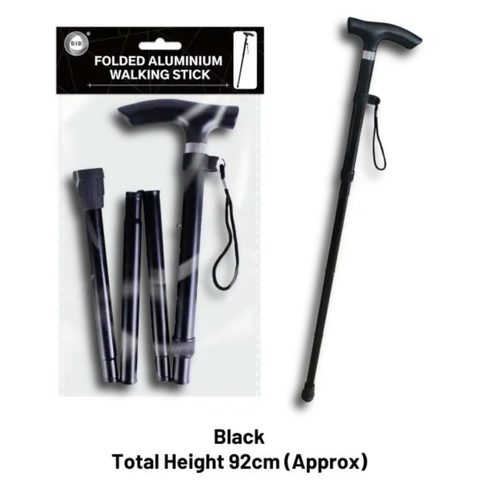
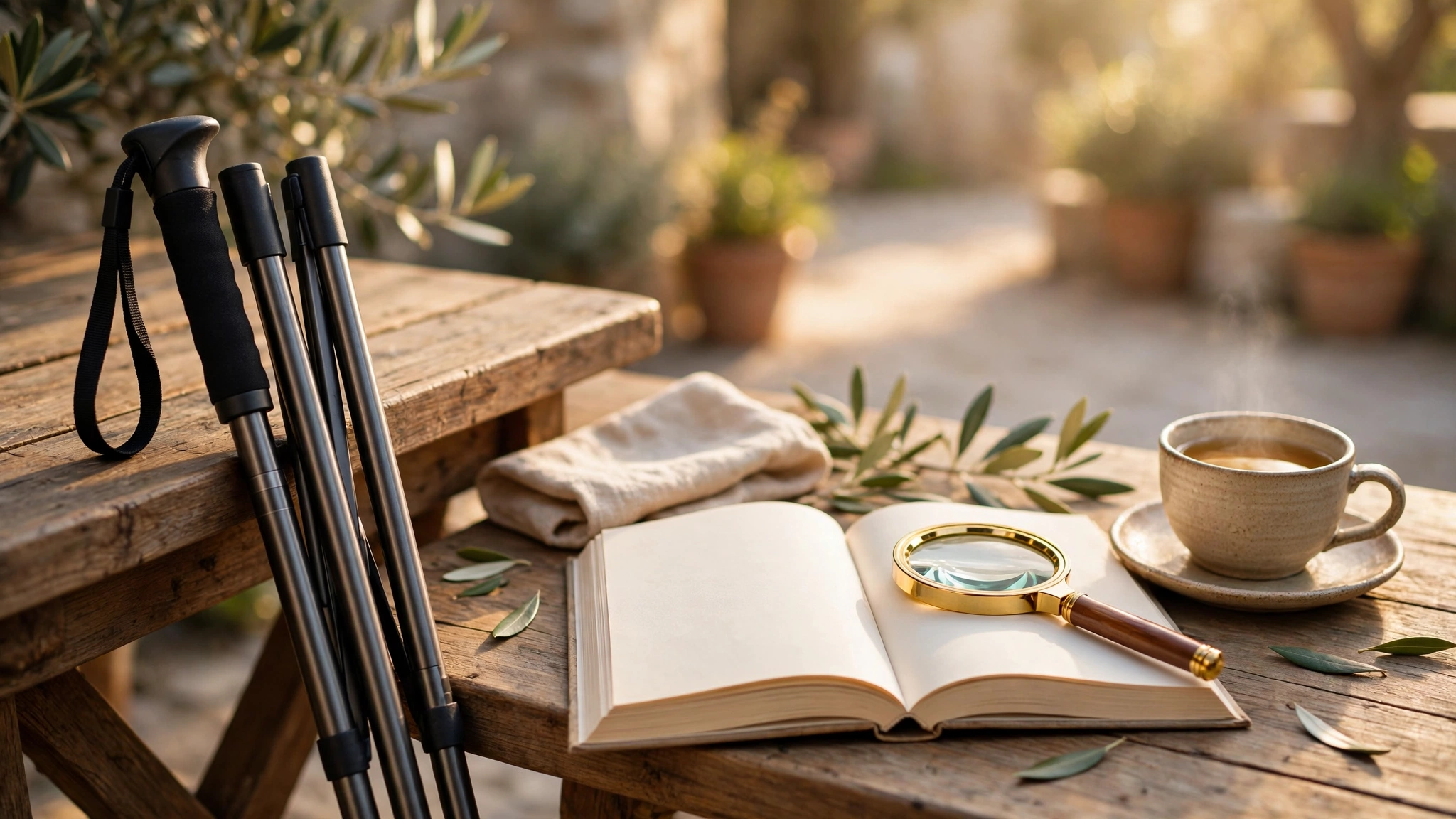
A walking stick does its job properly when the top of its handle sits level with the crease of your wrist, with your arm hanging straight at your side. Too long pushes your shoulder up with every step; too short makes you stoop towards it. The folding aluminium stick here, £3.68, adjusts to that height in seconds — and then folds away when you reach the café table.
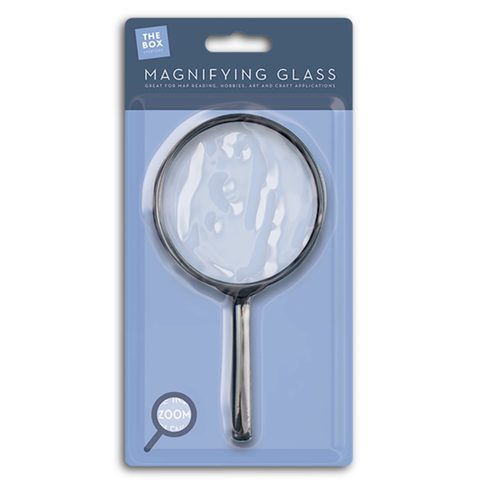
Beside it, a magnifying glass at £1.20 doubles the size of print. That modest doubling is the useful one: enough for medicine labels, menus and the cooking instructions on the back of a packet, without the wobbling, distorted view that stronger lenses give you.
Setting the height, once and properly
Stand in the shoes you normally walk in, on a hard floor, with your arms relaxed. The handle of the stick should meet the crease of your wrist. Adjust the stick's length until it does, then make sure the adjustment is locked — the collar or button should be fully seated, not nearly. Walk a few paces indoors and check the feel: your elbow should bend only slightly as the stick takes weight, and your shoulder should stay down and level.
It is worth redoing this check if you change to thicker-soled shoes or boots for winter. A centimetre sounds like nothing, and over a day of walking it is the difference between a stick that supports you and one you are quietly fighting.
Folding: for buses, cars and café tables
The stick folds down in sections, which is what makes it practical away from home. On a bus it sits in a bag or against your seat instead of across the aisle; in a café it folds under the table rather than leaning on a chair it will slide off; in a car it lives in the footwell or boot without rattling the length of the cabin. The wrist strap is part of the same practicality — loop it on, and a dropped stick is hanging at your wrist instead of lying on the pavement.
Two habits make a folding stick trustworthy. Put it up fully before you lean on it, checking each joint is straight and locked, every time — a half-seated section is the one real weakness of the design. And treat it as what it is: a good everyday aid for steadiness and longer walks, at £3.68 rather than the price of a fitted medical aid. If your balance is getting worse, a stick is a reason to talk to your GP or a physiotherapist, not a substitute for that conversation.
The ferrule wears out first
The rubber tip at the bottom — the ferrule — is the part that grips the ground, and it is a wear part. Its tread smooths down with use, and a smooth ferrule on wet paving stones or a tiled shop floor can skid where a fresh one would hold. Turn the stick over once a month and look: if the tread pattern has gone flat or the rubber is cracking, the tip needs replacing before it lets you down, and replacements cost pennies.
While you are looking, wipe grit out of the tread. Small stones lodge in the grooves and polish the rubber faster, as well as scratching indoor floors. The stick itself asks for nothing more than a wipe with a damp cloth.
Why 2x is the useful strength
It is tempting to assume a stronger magnifier is a better one. In practice, higher magnification shrinks the area you can see at once and bends the edges of the page, so reading becomes a slow hunt along each line. A 2x lens with a large head, like the £1.20 magnifier here, shows several lines at a comfortable size and keeps them straight — which is what reading a label or a menu actually needs.
Hold the lens a few centimetres above the print and move the lens rather than your head. Light matters as much as magnification: a lamp over your shoulder or a seat near the window will do more for grey, low-contrast print than any stronger lens. Dosage instructions, use-by dates, energy meter dials, sewing and the occasional splinter are the jobs this earns its drawer space on.
Frequently asked questions
How tall should a walking stick be?
The top of the handle should sit level with the crease of your wrist while you stand straight, in your usual shoes, with your arm hanging naturally. Adjust the stick to that height and check the lock before walking.
Can I take a folding walking stick on the bus?
Yes — that is what the folding design is for. It folds small enough for a bag or the space beside your seat, and the wrist strap keeps it with you when you are seated.
How close should I hold a magnifying glass to the page?
A few centimetres above the print works best for most people. Move the lens slowly along the line, and add light — print that looks faint usually needs a lamp more than it needs a stronger lens.
When should I replace the rubber tip on a walking stick?
When the tread has worn smooth or the rubber is cracking. A worn ferrule can skid on wet stone and tiles, so check it monthly and replace it at the first sign of smoothness.