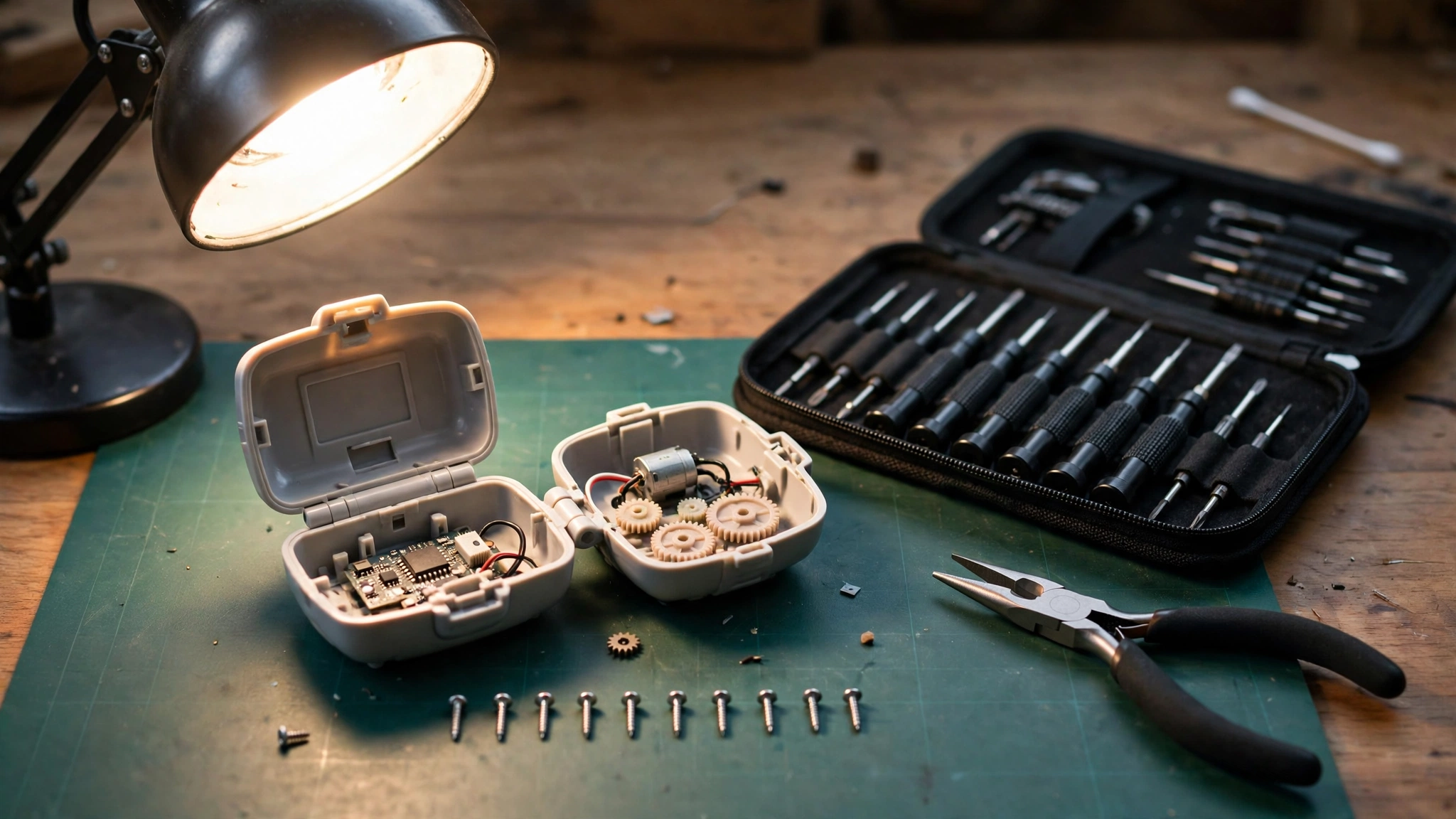
The repair usually is not broken — the screws are just too small for anything in the kitchen drawer. Toys, glasses, battery covers, remote controls and phone accessories are held together with tiny Phillips and Torx screws that a standard screwdriver will chew up in seconds. Precision tools are simply drivers in the sizes those screws actually come in.
A set costs between 86p and £2.20, which makes it one of the cheapest ways to stop throwing away fixable things. The honest limit comes later in the page: these tools open the toy and tighten the hinge. They do not diagnose a dead circuit board, and nobody should pretend otherwise.
Start with the set that covers the most screws
The Marksman 16 Piece Precision Screwdriver Set (£2.20) is the one to buy if you buy one thing here. Sixteen bits and drivers cover the small Phillips, flat and Torx sizes used across toys, glasses, game controllers and battery compartments, and the handles have the swivel cap that lets you turn the driver with fingertip pressure while your palm keeps it steady — the detail that separates a precision driver from a small one.
Magnetic tips matter more than they sound. A screw the size of a crumb, dropped inside a toy casing, is a repair abandoned; held on the tip, it goes back in its hole. Work over a tray or a tea towel so anything that does escape stays findable, and keep a note of which screw came from which hole — they are often different lengths in the same toy.
The 11-piece set and the pocket pair
The Precision Screwdriver Set 11pcs (£1.10) is the simpler drawer set: fewer sizes, enough for the jobs that come up weekly — battery covers, toy compartments, the odd loose hinge. It is the one to leave in the kitchen drawer while the bigger set lives at the desk.
Below that sits the 2pc Pocket Screwdrivers Set (86p): a Phillips and a slotted driver, 13cm long, made to live in a pocket, glovebox or keyring pouch. Their whole career is battery covers — which, on children's toys, are screwed shut on purpose so button batteries stay out of small hands. When a toy dies at a birthday party, the pocket pair is the difference between fixing it on the spot and a disappointed afternoon. If the basics here leave gaps, our basic tool kit rundown covers the full-size end of the drawer.
Long-nose pliers: fingers that fit
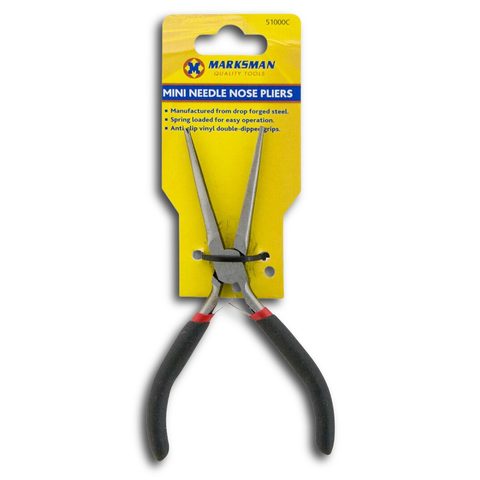
The Mini Long Nose Plier (£1.40) does the gripping your fingers are too wide for. Needle jaws reach into casings to retrieve screws, hold a nut while the driver turns, straighten a bent component leg, and pull a splinter of plastic from a battery terminal. Away from electronics entirely, the same jaws open and close the jump rings on jewellery, grip fishing hooks, and do most of what craft pliers do at three times the price.
The spring-loaded handle is not a gimmick on a tool this size — it means the jaws reopen on their own, so one-handed work inside a casing is possible while the other hand holds the torch. Grip is the limit: these are for holding and fetching, not for forcing anything rusted or structural.
Solder wire, with respect
The Marksman Solder Wire 20g (£1.20) is flux-core solder for the classic electronics repair: a wire that has come off a battery terminal, a dry joint on a speaker, a broken connection in a lamp. The flux inside the wire cleans the joint as it melts, which is why this type is the right one for beginners — no separate pot of flux to manage. Twenty grams is a sensible quantity: enough for dozens of small joints, not so much that it lives in the drawer for a decade.
The safety part, plainly. A soldering iron tip sits around 300°C and burns instantly; the work is for adults, on a heatproof surface, with the window open or a fan moving the fumes away — solder smoke is not something to breathe in a closed room. Tin the tip, heat the joint and not the solder, feed the wire in, and wash your hands afterwards, as solder contains lead. A teenager learning with an adult beside them is a fine thing; a child with a hot iron is not.
Frequently asked questions
What screwdriver do I need for a glasses screw?
A tiny flathead from a precision set — glasses hinge screws are usually 1.4mm to 2mm slotted heads. Work over a light-coloured cloth so the screw shows up if it drops, and tighten gently; the threads strip easily.
Are magnetic tips safe to use around electronics?
For household repairs, yes. The magnets in precision drivers are weak — enough to hold a screw, nowhere near enough to trouble modern phones, memory cards or laptops. Keep them away from magnetic-stripe cards if you want to be extra careful.
Which should I buy, the 16-piece or the 11-piece set?
The 16-piece if you fix a variety of things, because the extra Torx and Phillips sizes are the ones toys and gadgets actually use. The 11-piece is the cheaper drawer spare for battery covers and simple jobs.
Can a beginner learn to solder with wire like this?
Yes — flux-core wire is the forgiving sort made for exactly that. Practise on scrap wire first, keep the iron moving so nothing overheats, and have an adult do the first sessions with any younger learner.
Shop the products in this guide
 Marksman 16 Piece Precision Screwdriver Set Electronics Jewellery Repair Kit£2.20View product
 Mini Long Nose Plier Needle Nose Electronic DIY Jewellery Pliers£1.40View product
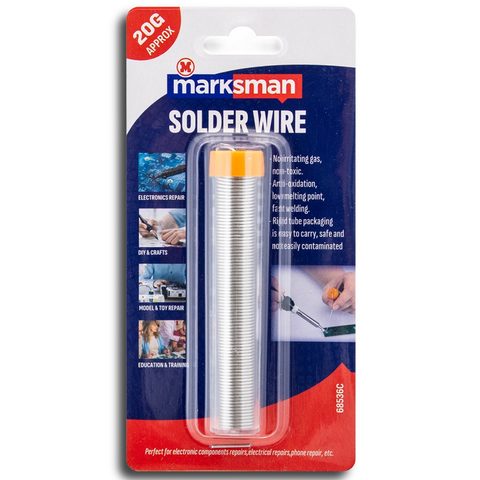 Marksman Solder Wire 20g – Flux Core Solder for Electronics Repair£1.20View product
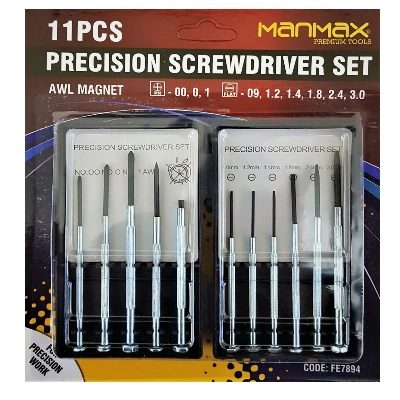 Precision Screwdriver Set 11pcs£1.10Out of stockView product
 2pc Pocket Screwdrivers Set Phillips & Slotted Precision Screwdrivers 13cm£0.86Out of stockView product