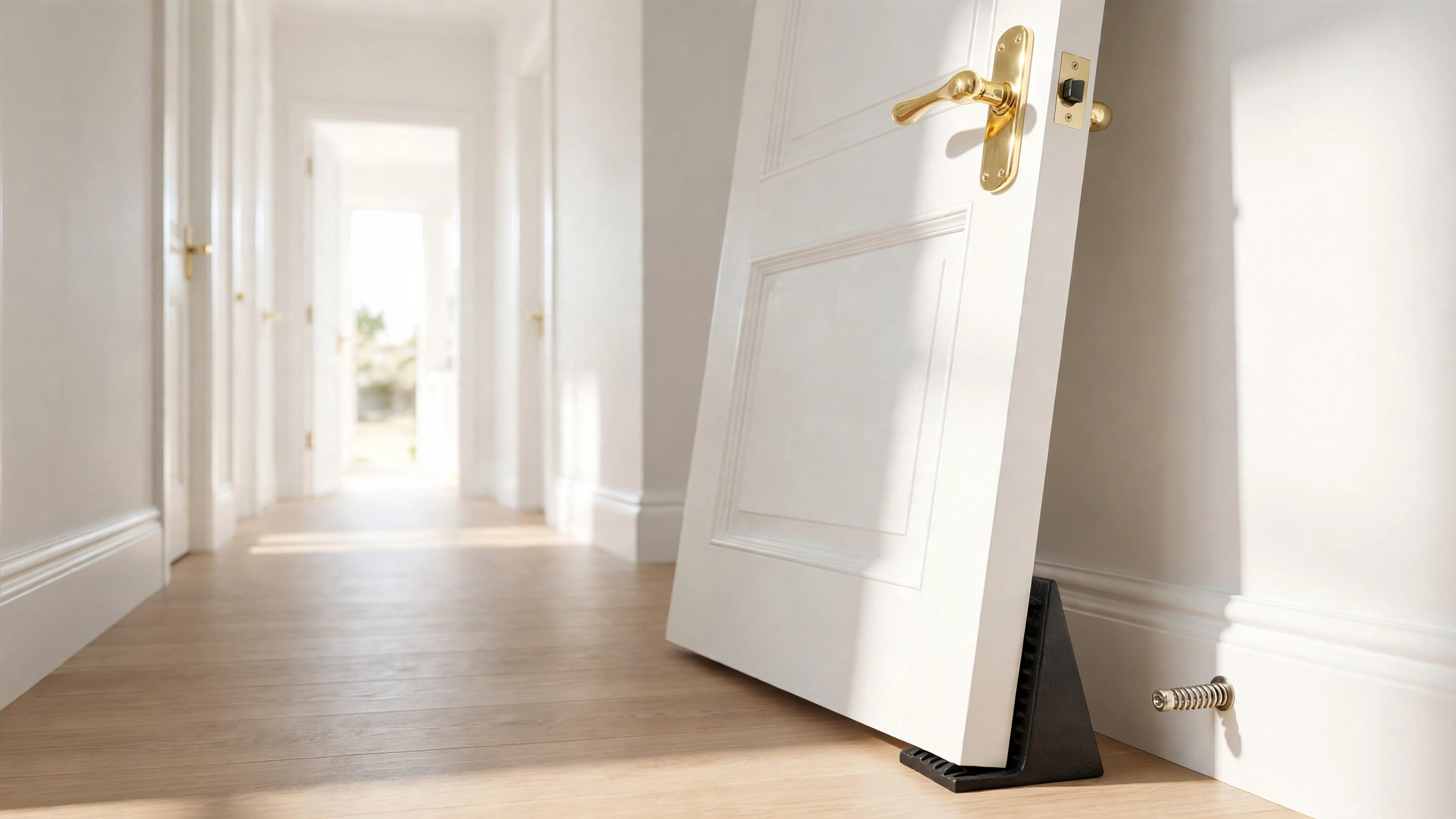
Door hardware splits into two plain jobs: stopping a door from doing damage, and holding it where you want it. A spring stop fitted at skirting level takes the hit so the handle never reaches the plaster, and a rubber wedge holds a door open against the draught that keeps slamming it - most of it for about a pound a door.
Locks are the second half of the story, and they split too: a locking handle for privacy inside the house, and a hasp, staple and padlock for the shed and gate, where the weather and the opportunist are the problems.
Spring stops save walls
Every house has the mark: a handle-shaped dent in the wall behind a door that swings too far. Our Door Stopper Set (£1.14 for 3, with fixings) screws to the skirting board in line with where the handle would strike, and the spring flexes on impact instead of the plaster cracking. Three in a pack covers the doors that get flung - usually the living room, the bathroom and a child's bedroom.
Fit them at skirting height, open the door gently to check that handle and stop meet properly, and then they disappear from notice; the black finish suits most modern skirting. If the skirting is MDF or the wall is freshly plastered, drill a small pilot hole first so nothing splits or crumbles as the screw bites. On doors that open against a tiled or panelled wall where you cannot screw, a wedge used as a stop is the fallback - less tidy, but no holes.
Wedges hold doors open
The Rubber Door Stop wedge (£1.16) is the extra-wide, heavy-duty sort, and width matters: a wedge works by friction, and a narrow one on a smooth laminate floor under a heavy door just goes for a slide. Push it firmly under the leading edge of the door until the door stays put when you let go. The Black Door Stops 5 Pack (£1.06) spreads the same idea across several rooms cheaply, and the cream Rubber Door Stop 2 Pack (£0.86) suits lighter doors and lighter floors.
Wedges live hard lives - they get kicked, hoovered up and borrowed by other doors. Keeping a pack rather than a single stop means the one you need is actually under the door, and not doing duty as a bookend upstairs.
When a locking handle makes sense
Our Door Handles with Locks (£4.44 for a set with keys, in gold and silver finishes) are for internal doors: the home office in a shared house, an HMO bedroom, a teenager's door that has earned its privacy, or the room where the presents hide in December. They fit standard internal doors and latch like an ordinary handle, with a key for the lock.
Be clear about what they are not. A locking handle is a privacy lock, not a security lock - it will not do the work of a proper mortice deadbolt on a front or back door, and it should never be the only lock on an external door. Keep a spare key outside the room it protects, because a child locking themselves in is a when, not an if.
The shed gets a hasp, staple and padlock
For sheds, gates and coal bunkers, the classic fitting is a hasp and staple: the plate screws to the frame, the hinged hasp folds over a loop, and a padlock through the loop locks it. Our 3-inch Hasp and Staple set (£1.14) comes with a 25mm brass padlock and three keys. Fit it with the longest screws the frame will take, into solid wood - a hasp screwed into a rotten shed door is decoration, not security.
Brass suits a padlock that lives outdoors, since it does not rust shut. And once the doors themselves are sorted, remember the other half of door care: a door that shuts properly can still leak heat around all its edges, which is the job covered in our guide to draught-proofing your home.
Frequently asked questions
Where exactly should a spring door stop be fitted?
On the skirting board, directly in line with the door handle, so the spring meets the door at the point the handle would otherwise strike the wall. Open the door slowly and mark the spot before you drill anything.
Why does my door wedge keep sliding across the floor?
Friction has lost: usually a narrow wedge, a dusty underside, or a heavy door on a very smooth floor. Wipe the grit off the wedge, choose a wider and heavier one, and push it in firmly rather than just dropping it by the door.
Can I fit a locking handle to any internal door?
Most standard internal doors, yes - the latch size is the thing to check, as older doors occasionally use a longer backset. Measure the old latch before ordering, and keep one key outside the room for emergencies.
Is a hasp and staple enough to secure a shed?
It stops the opportunist, which is most shed theft, especially as the fixing screws are hidden once the hasp is closed. Determined thieves need bigger answers - lighting, an alarm, and not storing the most valuable tools in the shed at all.
Shop the products in this guide
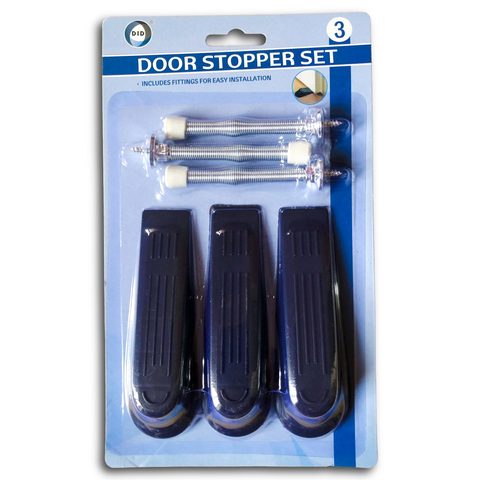 Door Stopper Set 3 Pack Spring Door Stops with Fixings Black£1.14View product
 Rubber Door Stop Extra Wide Heavy Duty Door Wedge Stopper£1.16View product
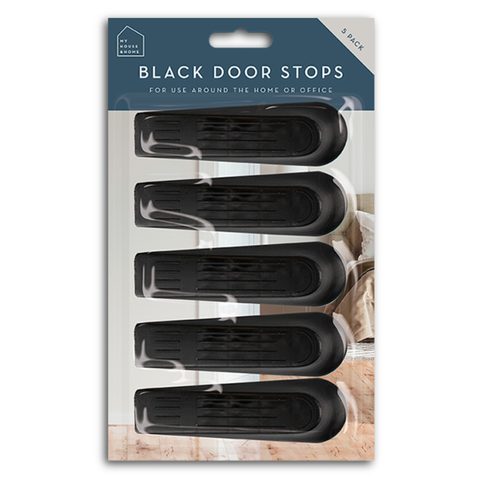 Black Door Stops 5 Pack£1.06Out of stockView product
 Rubber Door Stop 2 Pack Non Slip Door Wedges Cream Door Stoppers£0.86Out of stockView product
 Door Handles with Locks Gold & Silver Entrance Door Lock Set with Keys£4.44View product
 3″ Hasp and Staple with 25mm Brass Padlock & 3 Keys Security Lock Set£1.14Out of stockView product