Bath and basin plugs come in several close-but-not-equal sizes, which is why the plug that should fit lets the water creep quietly out of the bath. An assorted set of five rubber plugs, £1.16, ends the measuring and guessing: one of them will seal your bath properly, and the rest cover the basin and the sinks.
The other half of the job is stopping hair and bits reaching the pipes at all. A stainless steel strainer at £1.10 sits over the plughole and catches what would otherwise gather into a slow drain and, eventually, a plumber's bill. Two small items, and between them they cover most of what goes wrong at a plughole.
Why plug sizes are a lottery
There is no single standard size for a bath or basin waste, and the differences are small enough to fool you — a plug a few millimetres too small looks seated, feels seated, and loses a bathful of water over twenty minutes. Rubber plugs cope with this better than rigid ones because the tapered edge flexes and wedges into the opening, sealing across a small range of sizes rather than one exact one.
That is the sense in an assorted set. The Bath Plug Set at £1.16 gives you five plugs in graduated sizes for baths and sinks, so instead of measuring a hole with a ruler and hoping, you try the nearest size, run a few centimetres of water, and watch whether the level holds. Keep the spares in the bathroom drawer: plugs get borrowed, dropped behind baths and chewed by toddlers, and a spare in the house beats a hand held over the plughole.
Chain or no chain
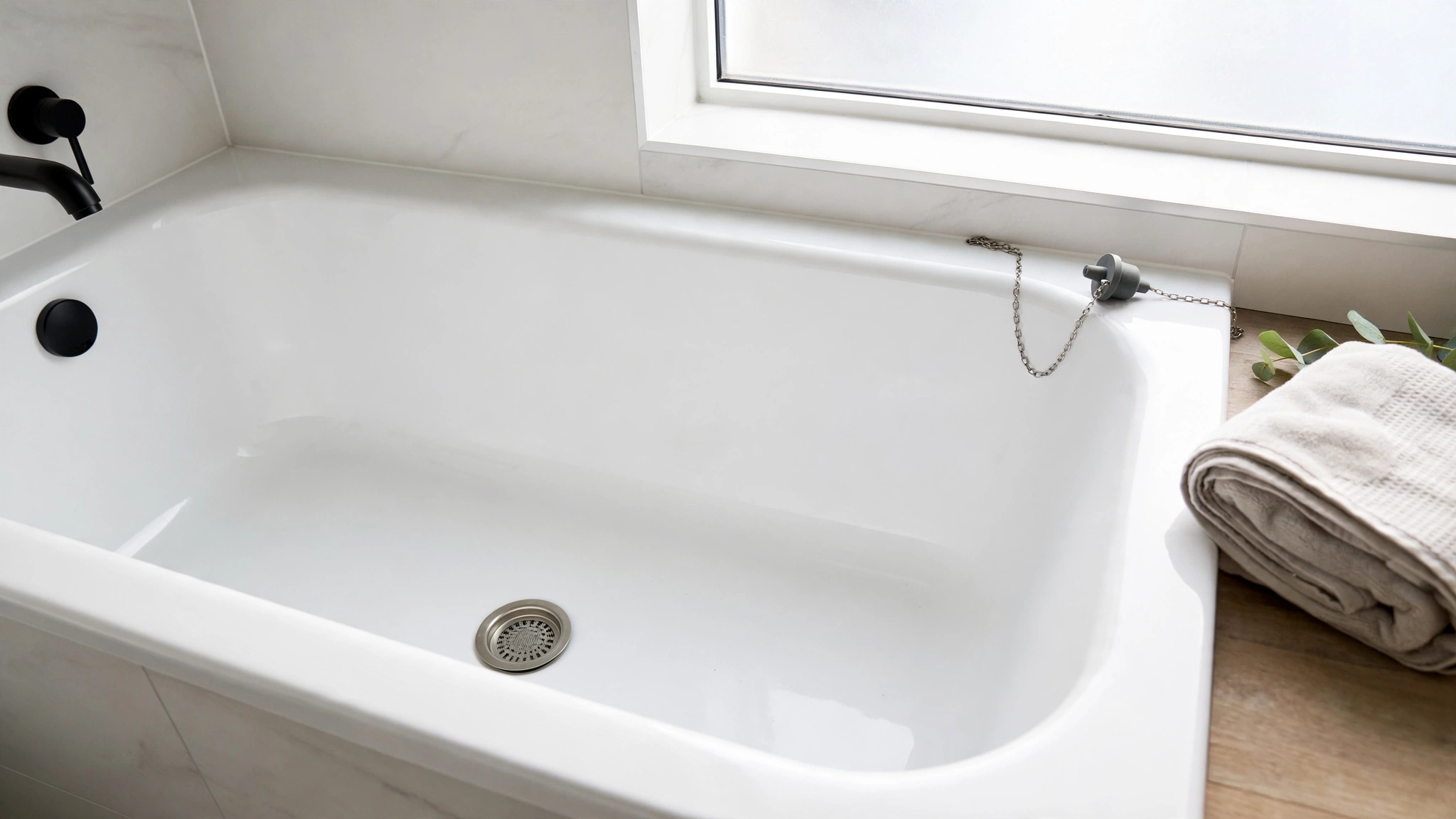
The chain is not decoration. It keeps the plug attached to the bath, which matters in houses with children, guests, or anyone who takes the plug out and puts it somewhere creative. If your old plug has torn away from its chain, the chain and its anchor screw usually survive — unhook the torn plug and clip a new one on.
A plain plug without a chain is fine for a basin you use yourself, and it is easier to lift out and rinse. Whichever you choose, check the anchor point now and then: chains fail at the bath overflow screw, and a plug that drops and vanishes under a bath panel is a small mystery nobody needs.
Strainers catch it before the drain does
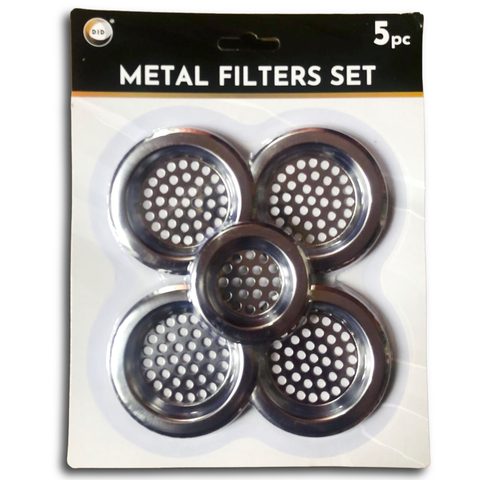
The Metal Filters at £1.10 are a five pack of stainless steel strainers made for kitchen sinks, basins and baths. In the bath, the strainer sits over the plughole during a shower or hair wash and collects the hair that would otherwise wrap itself around the trap below. Afterwards you lift it, tap the contents into the bin, and put it back — ten seconds, no chemicals, no fishing around with wire.
Five in a pack is the useful number. One lives in the bath, one in the bathroom basin for toothpaste caps and hair, one in the kitchen sink for food scraps, and there are still spares. Because they are steel rather than plastic, they sit flat under their own weight, do not float away when the water runs, and rinse clean instead of holding a smell.
Looking after rubber and metal
Rubber perishes. Heat, bath oils and time make plugs harden and crack at the edge, and a hardened plug stops sealing no matter how firmly you push it in — that, not the bath, is usually why an old plug starts leaking. Rinse plugs after use, let them dry rather than sitting in a puddle, and replace them when the edge feels stiff or looks cracked.
Strainers ask even less: a rinse after use and a scrub with an old toothbrush every week or so keeps the mesh clear. One honest limit for both items — a strainer prevents blockages, it does not clear one. If the drain is already slow, the plug and strainer are not the cure; clear the trap first, then let the strainer stop it happening again.
Frequently asked questions
How do I know which size plug I need?
Measure across the plughole as a rough guide, but expect the answer to be approximate. Tapered rubber plugs seal across a small range of sizes, which is why an assorted set of five settles the question faster than exact measuring does.
Why does my plug leak slowly even when pushed in firmly?
Usually the rubber has hardened or cracked with age, or grit is sitting under the rim. Clean the rim, and if the plug still loses water, replace it — perished rubber never recovers its seal.
Will a strainer slow down how fast my bath empties?
Only when it is covered in hair, which is the strainer doing its job. Lift it out, tap the hair into the bin, and the flow returns to normal.
Can I use the same strainer in the kitchen and the bath?
The same design works in sinks, basins and baths, but keep separate ones for each place for basic hygiene. A five pack makes that easy without buying anything twice.